

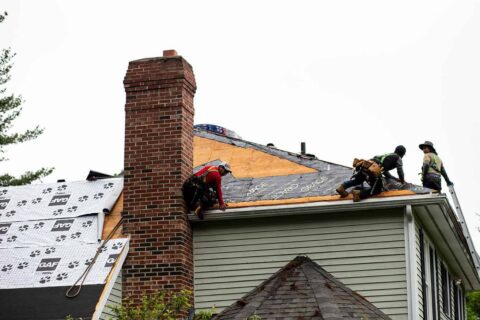
How much does a new roof cost in New Hampshire? Honestly, nobody can tell you from a phone call, and you should be careful with anyone who does. The cost of a roof replacement here comes down to a handful of measurable things: the size and pitch of the roof, how many layers of old material have to come off, what the crew finds on the deck underneath, the material you choose, and how hard the house is to work around. Two houses on the same street can land a long way apart on all five.
What follows is what we actually measure when we walk a roof, in the order it tends to matter. After thirty-odd years on Seacoast roofs, these are the things that move a number.
Key takeaways
- No honest contractor prices a roof over the phone. Five measurable factors set the number, and they vary house to house on the same street.
- Roof size is not house size. Pitch, dormers, valleys and hips add surface area and labor that a floor plan never shows.
- The deck underneath is the one thing nobody can price from the ground. A fair estimate names a per-sheet decking price up front.
- When one estimate comes in far lower, the gap is almost always ice and water shield, new flashing, ventilation or a full tear-off.
- Get three estimates and compare the five line items that are easy to leave out, not the totals.
How much does roof size and pitch affect the cost?
Roof size is not house size, and pitch matters as much as area. Dormers, valleys and hips add surface a floor plan never shows. Once a slope needs staging, harnesses and roof jacks, the same square footage takes longer and takes more people.
Roof size is not house size. A 1,800-square-foot ranch and an 1,800-square-foot colonial have very different roofs, and dormers, valleys and hips add surface area that a floor plan never shows.
Pitch matters as much as area. A walkable roof is straightforward. Once the slope gets steep enough that the crew needs staging, harnesses and roof jacks, the same square footage takes longer and takes more people. A lot of the older capes and Victorians around Dover, Exeter and Portsmouth are steep, and that is a real cost, not a markup.
How many layers of old roofing have to come off?
Plenty of New Hampshire homes carry two layers of asphalt, and some carry three. Every layer is tear-off labor and disposal weight. Going over an existing layer is sometimes legal, but it is almost always the wrong call in this climate.
New Hampshire has plenty of homes carrying two layers of asphalt, and some with three. Every layer is tear-off labor and disposal weight. Going over an existing layer is sometimes legal but it is almost always the wrong call here. You cannot inspect a deck you have covered up, and you are adding weight to a structure that has to carry snow load all winter.
If you have been told a roof can simply be layered over, ask what happens if the sheathing underneath is soft.
What happens if the roof deck is rotten?
Rotten sheathing has to come out and be replaced, and nobody can price that from the ground. A fair estimate names a per-sheet cost for replacement decking before work starts, so there is no negotiation while your roof is open to the weather.
This is the one nobody can price from the ground, and the reason a written estimate should say what happens if the crew finds rot. Sheathing that has been wet under a failed valley or an old ice dam has to come out and be replaced. On coastal homes we find this more than most people expect.
A fair estimate names a per-sheet price for replacement decking up front so there is no conversation about it while your roof is open. That is the question to ask every contractor who bids the job.
Which roofing material makes the most sense in New Hampshire?
Architectural asphalt is the sensible default for most Seacoast homes. Standing-seam metal costs more up front and pays it back over decades, sheds snow instead of holding it, and handles salt air better. Flat sections over porches and additions are a separate system entirely.
Material choice is the part homeowners think about first and it is genuinely a large lever, but the spread is wide and the right answer depends on the house.
| Material | Relative cost | Typical service life in NH | Best suited to |
|---|---|---|---|
| 3-tab asphalt | Lowest | Shortest | Budget-driven replacement, rentals |
| Architectural asphalt | Moderate | Long | Most Seacoast homes, the default for good reason |
| Standing-seam metal | Highest up front | Longest by a wide margin | Snow shedding, salt air, low-slope sections |
| EPDM / TPO membrane | Varies by area | Long | Flat and low-slope sections, porches, additions |
Architectural asphalt is what goes on most of the roofs we do, and for most houses it is the sensible choice. Metal costs more at installation and pays it back over decades. It sheds snow instead of holding it, and it handles salt air better than almost anything else, which matters a great deal in Hampton, Rye and New Castle. If your roof has a flat section over a porch or an addition, that section is a different system with its own cost.
How does access to the house change the price?
How the crew gets material up and debris down is a genuine cost. A driveway alongside the house is a different job from mature trees, a septic field, tight neighbors or a downtown lot with nowhere to put a dumpster. Some sites need street staging and a permit.
How the crew gets material up and debris down is a genuine cost. A house with a driveway right alongside it is a different job from one with mature trees, a septic field, tight neighbors or a downtown lot with nowhere to put a dumpster. Rowhouses and mill conversions in the older parts of Dover and Portsmouth often mean staging from the street and a permit to do it.
Which New England roofing details get left off cheap estimates?
Ice and water shield, ventilation, new flashing and gutters. These are the four items that turn up as extras on a low bid. When one estimate is meaningfully cheaper than the others, this list is almost always where the difference went.
These are the ones that turn up as “extras” on a cheap estimate:
- Ice and water shield. Along the eaves and in the valleys. Not optional in this climate, and the coverage in a proper estimate goes well past code minimum.
- Ventilation. Ridge vent and adequate intake. Most of the attic-moisture problems we get called out to are ventilation problems wearing a roof problem’s clothing.
- Drip edge and flashing. Chimney, sidewall, step flashing. Reused old flashing is the single most common corner cut we find on a failed roof.
- Gutters. Frequently due at the same time, because the fascia is exposed anyway and doing it in one visit is cheaper than doing it twice.
If one estimate is meaningfully lower than the others, this list is usually where the difference went.
Does the time of year change what a roof costs?
We roof year-round on the Seacoast, but the calendar is not neutral. Late summer and early autumn are the busiest stretch, and asphalt seals best in warmer weather. Emergency work after a storm is a separate situation, driven by getting the house dry.
We roof year-round on the Seacoast, but the calendar is not neutral. Late summer and early autumn are the busiest stretch, and asphalt seals best in warmer weather. Emergency work after a storm is its own situation. That is about getting the house dry, not about optimizing a schedule.
Do you need a repair or a full replacement?
Not every roof needs replacing. Granules in the gutters and widespread curling usually mean the roof is at the end of its life. A single leak at a chimney or valley, on a roof with years left, is a repair. An inspection tells you which one you have.
Not every roof needs replacing. Worth an inspection rather than a replacement conversation if you are seeing:
- Granules collecting in the gutters
- Shingles curling, cupping or lifting at the edges
- A stain on a ceiling that comes and goes with the weather
- Moss holding moisture between shingles on the north side
- Fasteners backing out after a wind event
- Daylight visible through the roof deck from inside the attic
Some of that is a repair. Some of it is a roof at the end of its life. The difference is worth knowing before you spend anything.
How should you compare roofing estimates?
Get three, then read them for the items that are easy to omit: full versus partial tear-off, per-sheet decking cost, ice and water shield coverage, whether flashing is new or reused, and the ventilation plan. Compare those five before you compare totals.
Get three. Then read them for the things that are easy to leave out:
- Is the tear-off full, and how many layers is it priced for?
- What is the per-sheet cost if decking has to be replaced?
- How far up from the eaves does the ice and water shield run?
- Is all flashing new, or is any of it being reused?
- What is the ventilation plan?
- Which warranty applies: the manufacturer’s on materials, and the contractor’s on workmanship? They are two different things and both should be in writing.
- Is the contractor licensed and insured, and can they show a certificate?
A cheaper number that skips items 2 through 5 is not a cheaper roof. It is the same roof with the hard parts deferred to you.
How do you get a real number for your roof?
The only honest way to price a roof is to look at it. We measure, get into the attic where we can, check ventilation and flashing, and put it in writing with the assumptions stated. No charge and no obligation.
The only honest way to price a roof is to look at it. We measure, get into the attic where we can, check the ventilation and the flashing, and put it in writing with the assumptions stated. No charge, and no obligation.
See everything we handle on our roofing services page, or book a free estimate and we will get someone out to you. If the timing is difficult, financing options are available.
Frequently asked questions
How much does a new roof cost in New Hampshire?
There is no single figure, and any contractor quoting one before seeing the roof is guessing. The cost is set by roof size and pitch, how many layers of old material come off, the condition of the decking underneath, the material chosen, and how accessible the house is. A written estimate after an on-site inspection is the only number worth acting on. We provide those free.
What makes one roofing estimate so much cheaper than another?
Usually the parts you cannot see. The common omissions are a partial tear-off instead of a full one, reused flashing rather than new, minimum ice and water shield coverage, no ventilation work, and no stated price for replacing rotten decking. Compare those five line items directly before comparing totals.
Is a metal roof worth the extra cost in New Hampshire?
On the right house, yes. Metal costs more to install and lasts substantially longer, sheds snow rather than holding it, and stands up to coastal salt air better than asphalt. It makes the most sense on homes near the water, on steep roofs where snow load is a concern, and on low-slope sections. On a straightforward inland roof, architectural asphalt is often the better value.
Can I put a new roof over the old one to save money?
It is sometimes permitted, but we do not recommend it here. Layering hides the decking so nobody can inspect for rot, and it adds weight to a structure that carries snow all winter. It also shortens the life of the new shingles, because the surface underneath is uneven and holds heat.
Do I need a full roof replacement or just a repair?
Depends what is failing and how old the roof is. Granules in the gutters, widespread curling and lifting shingles usually mean the roof is at the end of its life. A single leak around a chimney or a valley, on a roof with years left, is a repair. An inspection tells you which one you have.
Does homeowners insurance cover a roof replacement in New Hampshire?
Sometimes, when the damage is sudden and storm-related (wind, hail, a fallen limb). Wear and age are not covered. If you think a storm damaged your roof, document it and get it inspected quickly, because most policies have time limits on filing.
How long does a roof replacement take?
Most residential roofs on the Seacoast are a one to three day job once the crew is on site, weather permitting. Steep roofs, multiple layers, extensive decking replacement or difficult access add time. We give a schedule with the estimate.