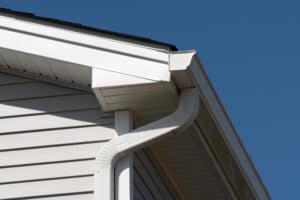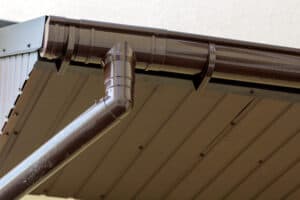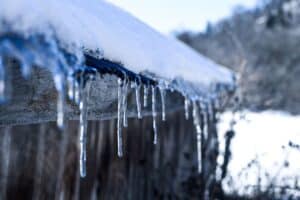
Cold weather often sneaks up on parts of the home that can get overlooked. Most people focus on roofs during winter, but gutters are affected too. We have observed this during February inspections as a Hampton roofing company. Gutters can begin pulling away after a long period of freezing nights and barely-thawed days. It is not just from heavy snow, though that contributes, but primarily the repeated process of freezing and thawing.
As winter ends in New Hampshire and Southern Maine, signs of damage become more visible. Warmer days melt snow, and problems that developed quietly over the past couple of months start to show. Spotting these early signs now can help prevent spring storms from making things worse.
What Freeze and Thaw Really Do to Gutters
Ice in the gutter does not just melt and go away; there is more involved. When water remains inside after a snowstorm and temperatures drop, it turns to ice. Ice occupies more space than water, which puts pressure on the sides of the gutter. This happens inside downspouts or in tight bends. After several cycles, the entire system begins to strain against its fasteners.
Each day brings a new challenge. Temperatures often warm just enough to melt a top layer of snow or ice, then refreeze overnight. This movement impacts more than just the surface. It stresses fasteners, shifts gutter brackets, and weakens attachment points on the fascia. Winters in this region last long enough for the cycle to repeat many times, allowing small stress points to become a more serious separation.
Signs Your Gutters Are Starting to Shift
Gutters do not detach in a single day. Clues emerge gradually and can be easy to miss. Once you know what to watch for, the damage becomes more apparent. Keep an eye out for things like:
• Gaps between the edge of your roof and the gutter
• Water spilling over the side during a melt instead of going through the downspout
• Changes in how straight or level the gutter appears from the ground
• Sections that dip, angle outward, or pull away after a snowstorm
These early signs may not seem urgent, but they indicate that something beneath the surface has changed.
Why Proper Mounting and Spacing Matters
Gutters stay in place with the correct type and number of fasteners to support the weight of snow and ice. If fasteners are spaced too far apart or attached to soft or old wood, winter stress may cause them to loosen quickly. Even high-quality materials face stress when twisted or pulled repeatedly by fluctuating temperatures. Our gutter crews custom-fabricate 5- and 6-inch seamless systems on-site using premium Englert metals, so the brackets and hangers are built to handle tough New England weather.
Brackets often loosen gradually over the season. You might not hear or see this happening. As they shift, water begins leaking through weak spots, which can lead to long-term issues with siding or drip edges. If the gutter does not hang level, water can pool and freeze in unexpected places instead of draining. This accelerates ice buildup and creates a repeating cycle.
What Happens If Gutters Pull Away and Stay That Way
When gutters start to separate and the problem goes unaddressed, the damage continues. Water will find any available pathway, often ending up where it is least wanted. Runoff cannot flow properly and ends up pouring behind the gutter or along the siding. This kind of continual drip can decay wooden trim and shift the soil near the foundation.
Additional issues occur higher up. Pulled gutters can change how snow melts along the roof’s edge. If water backs up under the shingles, it might get under the roof deck or reach the attic. Depending on what is below, this can cause problems indoors.
When to Call in Roof and Gutter Professionals
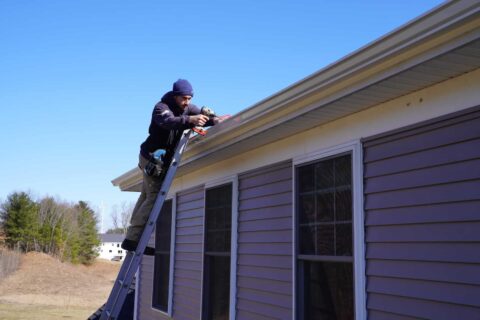
Not all gutter problems are easily seen from the ground, and many go beyond what is visible. It is a good idea to let professionals assess the situation, especially if the problem follows rough weather. As a Hampton roofing company, we are familiar with freeze-thaw stress and know what to examine beyond the hangers or seams.
This assessment includes checking if drains are open, if brackets have separated from the fascia, and if any other nearby roofing components have shifted. Frequently, the roof’s edges and gutters function together. If one has issues, the other is often affected as well. Since most winter weather stress does not become fully apparent until late winter, this is the ideal time to inspect before spring rain arrives.
Getting Ahead of Gutter Problems Before Spring Rains
Late February offers a small window to address issues before the next round of storms. Snow is melting more quickly now, but if your gutters have been under stress or have shifted all winter, they may not be prepared for spring. Addressing gutter pull-away protects the building materials at the edge of your home. Our seamless gutter and leaf guard systems are designed to move water away from the roofline efficiently and help prevent the overflows that often show up when spring rain follows a long winter.
Experience in New Hampshire and Southern Maine has shown that challenges left unattended in March often require larger repairs by April. Gutter cracks expand, mounts fail, and meltwater can find new ways down the exterior. It is better to act now, before wet spring weather creates additional stress along the roofline.
Noticing your gutter system pulling away or seeing signs of winter stress along the roofline means it is time for an inspection before the next storm. Ice, snow, and temperature changes can cause significant roof edge damage by turning small concerns into major repairs. As a local provider who understands New Hampshire and Southern Maine weather, we know proper drainage protects your home. When you need a trusted Hampton roofing company to inspect your gutters, call J. Carnes & Son Roofing today.