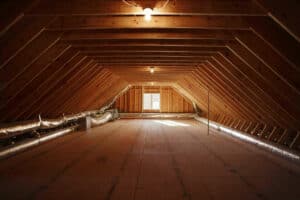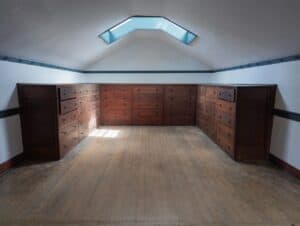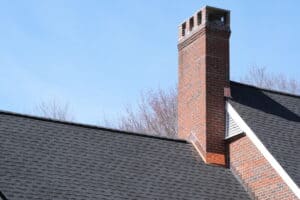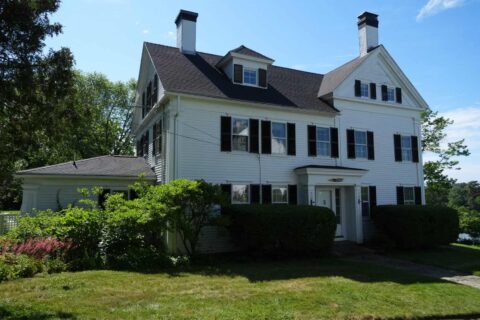
You head up to your attic to grab the holiday decorations and notice something unsettling: water droplets clinging to the underside of the roof sheathing, damp insulation, maybe even dark stains creeping across the rafters. If you’re a homeowner in New Hampshire, you’re far from alone. Attic condensation is one of the most common and most misunderstood problems we see in homes across the Seacoast and southern NH.
The good news? Not every bit of moisture means your roof is failing. The bad news? Left unchecked, persistent condensation in your attic can lead to mold growth, rotting decking, ruined insulation, and repair bills that dwarf what prevention would have cost. This guide will walk you through the science of why it happens, what to look for, and when it’s time to call in a professional.
How Condensation Forms in Your Attic
The basic mechanism is the same one that fogs up your bathroom mirror after a hot shower. Warm, moisture-laden air meets a cold surface, and the water vapor in that air turns back into liquid. In a New Hampshire winter, the underside of your roof deck can easily drop below 32°F. When warm air from the living space below rises into the attic through light fixtures, plumbing penetrations, attic hatches, or gaps around ductwork, it hits that frigid surface and condenses.
The reason this is particularly aggressive in New Hampshire is our climate: we see sustained stretches of sub-zero temperatures from December through February, which means the temperature difference between your heated living space and the roof deck can exceed 80°F. That dramatic contrast turns your attic into a condensation factory if warm air has any path upward.
The 5 Most Common Causes of Attic Moisture in NH Homes
- Inadequate Attic Ventilation Your roof system is designed to breathe. Soffit vents pull cool air in along the eaves, and ridge or gable vents exhaust warm, moist air at the peak. When these vents are blocked by insulation, painted shut, or simply insufficient for the square footage, moisture has nowhere to go. We frequently find homes in towns like Stratham, Newmarket, and Newfields where soffit vents were inadvertently covered during re-insulation projects.
- Air Leaks from the Living Space This is the number-one culprit in most homes. Unsealed gaps around recessed lighting, bathroom exhaust fans vented into the attic (rather than to the exterior), pull-down attic stairs without weatherstripping, and plumbing or electrical penetrations all allow warm, humid household air to migrate upward. Even small gaps add up: a single unsealed recessed light can push a surprising volume of moist air into the attic over a cold winter night.
- Bathroom & Kitchen Exhaust Routed into the Attic Building code requires exhaust fans to vent directly to the outside, not into the attic, soffit, or roof cavity. Yet in older NH homes, it’s remarkably common to find dryer vents, bathroom fans, and even kitchen range hoods dumping moisture-laden air straight into the attic space. This single issue can generate enough moisture to cause visible frost on the roof sheathing within weeks.
- Insufficient or Damaged Insulation Insulation does double duty: it keeps your heating bills down and it maintains a thermal boundary between conditioned living space and the unconditioned attic. When insulation is thin, compressed, water-damaged, or missing in spots, heat escapes more readily, and where heat goes, moisture follows. Older homes in the Portsmouth and Dover areas often have original insulation that has settled or degraded over the decades.
- Ice Damming and Roof Leaks Sometimes what looks like condensation is actually water intrusion from ice dams. When heat escapes through the roof, it melts snow on the upper sections. That meltwater runs down to the colder eaves, refreezes into an ice dam, and backs water up under the shingles. The resulting leak can mimic condensation, making it tricky to diagnose without a professional inspection.
Warning Signs You Shouldn’t Ignore
Catching attic moisture problems early is the difference between a straightforward fix and a major remediation project. Here’s what to watch for:
on the underside of roof sheathing or rafters, especially during cold snaps.
that poke through the roof deck. Nails conduct cold and are the first place condensation appears.
or plywood decking. This suggests repeated wetting and early-stage rot or mold.
that has lost its loft. Wet insulation loses its R-value and accelerates the problem.
when you open the attic hatch — a strong sign of mold or mildew growth you may not yet see.
in bedrooms or hallways. Moisture is migrating through the ceiling structure.
If you see active dripping, widespread black mold, or sagging roof decking, don’t wait. These are signs of advanced moisture damage that can compromise the structural integrity of your roof. A professional assessment should happen within days, not weeks.
How to Control Moisture in Your Attic
Effective attic moisture control comes down to three principles working together: seal the air leaks, insulate properly, and ventilate adequately. Miss any one of the three and the problem persists.
Seal Air Leaks First
Before adding ventilation or insulation, you need to stop the flow of warm, moist air from below. An energy audit or attic inspection can identify the penetrations. Common fixes include caulking around electrical and plumbing penetrations, installing airtight covers over recessed light housings, weatherstripping the attic hatch or pull-down stairs, and re-routing any exhaust fans that terminate in the attic so they vent directly through the roof or a sidewall to the exterior.
Upgrade Insulation Where Needed
New Hampshire’s climate calls for attic insulation in the R-49 to R-60 range. That’s roughly 14 to 18 inches of blown cellulose or fiberglass. Many homes in the Seacoast region have R-19 or less. Bringing insulation up to current standards strengthens the thermal barrier, reduces heat loss into the attic, and cuts heating costs at the same time. Pay special attention to areas around chimneys, knee walls, and the edges near the eaves where insulation tends to be thin.
Ensure Proper Roof Ventilation
A balanced ventilation system is non-negotiable. The general guideline is 1 square foot of net free ventilation area for every 150 square feet of attic floor space, split evenly between intake (soffit vents) and exhaust (ridge vents). In practice, many NH homes have soffit vents that are blocked by insulation baffles that were never installed, or they rely on gable vents alone, which create dead air zones in the attic’s peak. Adding proper baffles to keep insulation clear of the soffits and upgrading to continuous ridge ventilation can transform attic airflow.
If your home has an older roof with only gable vents, think carefully before simply adding a ridge vent. Mixing vent types can sometimes short-circuit airflow, pulling air from the gable vents instead of the soffits. A roofing professional can assess your specific setup and recommend the right combination for your home’s geometry.
The Connection Between Condensation and Your Roof
Homeowners often think of condensation as an insulation issue or a ventilation issue, and it is. But it’s also very much a roofing issue. Persistent moisture on the underside of your roof deck weakens the plywood or OSB sheathing over time. We’ve seen decks that needed full replacement after just a few years of unaddressed condensation. That moisture also degrades the adhesion between shingles and the deck, can void manufacturer warranties, and accelerates the aging of every roofing component from the underlayment up.
That’s why addressing attic condensation and scheduling a roof inspection often go hand in hand. A roofing contractor experienced with New Hampshire conditions can evaluate the ventilation system, check for ice dam damage, inspect the deck from above and below, and identify whether the issue is purely moisture management or whether the roof itself needs attention.
Frequently Asked Questions
A small amount of temporary condensation during extreme cold snaps can be normal, especially in older homes. The concern is when it’s persistent, widespread, or recurring. If you see moisture every time you check the attic during winter, or if it doesn’t dry out when temperatures warm, that indicates a ventilation or air-sealing issue that needs professional attention.
Some fixes are well within DIY territory; weatherstripping the attic hatch, sealing visible gaps with caulk or spray foam, and ensuring bathroom fans vent to the exterior. However, evaluating your overall ventilation balance, checking for hidden air leaks, and inspecting the roof deck for damage are tasks where a professional will save you time and catch issues you might miss.
Not necessarily. Most attic condensation problems are solved with better ventilation and air sealing. However, if the moisture has been present long enough to cause soft or delaminated roof decking, mold penetration into the wood structure, or shingle failure, partial or full roof work may be part of the solution. An honest inspection will tell you what you’re dealing with.
Costs vary widely depending on the scope. Adding soffit baffles and a ridge vent during a re-roofing project is relatively affordable. Retrofitting ventilation into an existing roof, re-routing exhaust fans, and air-sealing an entire attic can range from a few hundred dollars for minor fixes to several thousand for comprehensive work. We recommend starting with a professional assessment to understand exactly what your home needs before committing to any solution.