

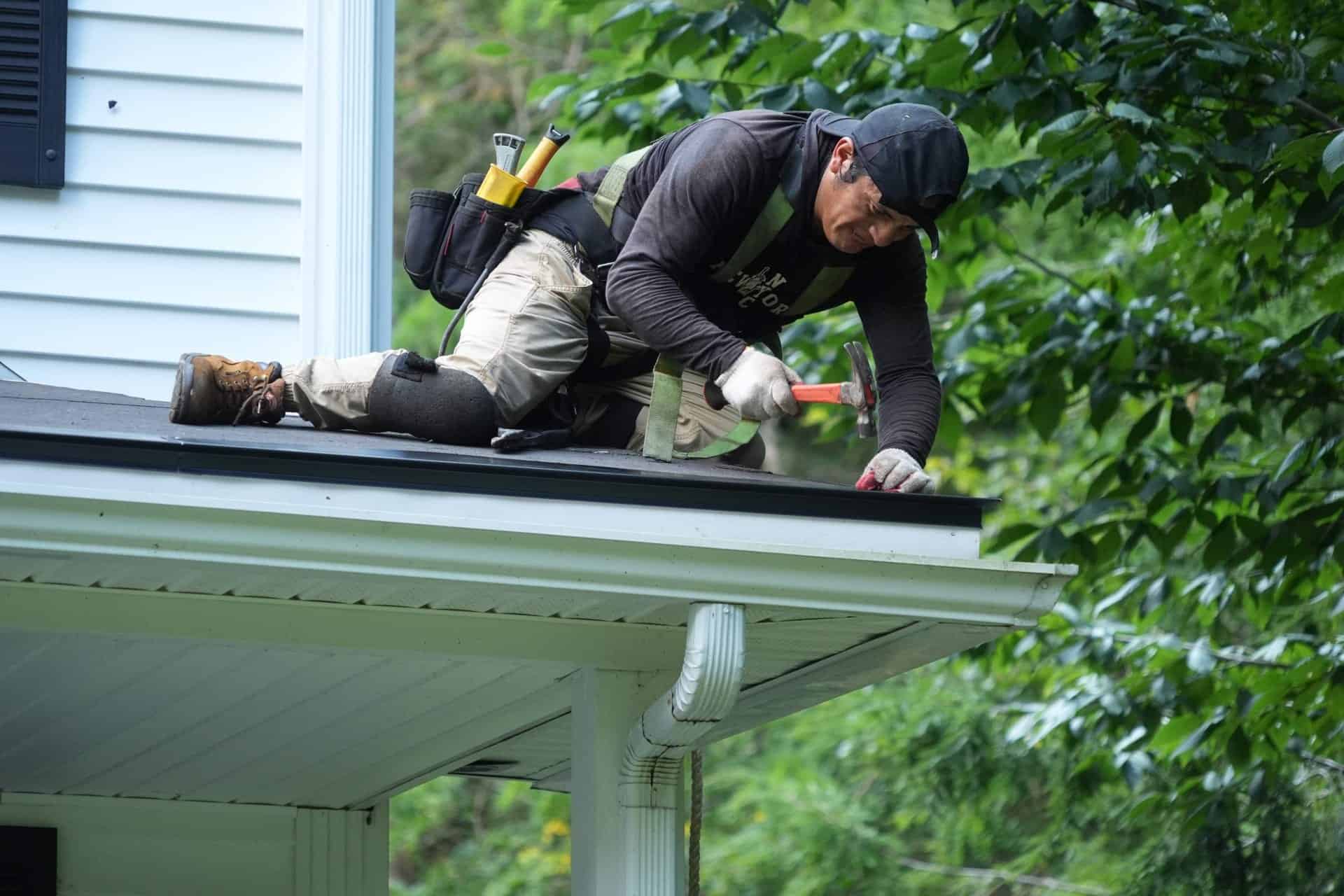
Most roof repair calls start inside the house. A stain on the ceiling, a drip in the closet, a few shingles in the yard after a blow. The roof itself may still have years left in it, and the problem is one weak spot: a lifted tab, a cracked boot on a vent pipe, flashing that let go at the chimney. Our job is to find that spot, fix it properly, and tell you honestly whether the rest of the roof is sound.
We are a family run, GAF certified roofing contractor, and the crews who handle repairs are the same crews who install roofs every week. Call (603) 686-7763 in New Hampshire or (207) 360-4800 in Maine for a free estimate.
The short version
- We repair asphalt shingle, metal, and flat or low slope roofs on homes and commercial buildings.
- Most leaks we find come from flashing, vent boots, valleys and wind lifted shingles, not the open field of the roof.
- After a storm, the first step is stopping the water. The permanent repair follows once the roof is dry and safe to work.
- If a roof is near the end of its life, we will say so and show you why before you spend money patching it.
- We cover the NH Seacoast, southern NH and southern Maine, with service area pages for each town below.
What roof leaks do you fix most?
A roof is rarely leaking in the middle of a plain slope. Water gets in where something breaks the surface. We trace it from inside the attic first, where the stain on the roof boards usually points uphill to the source, then confirm it from the outside. That way the repair goes where the water actually enters, not just where it shows up on your ceiling.
- Missing, creased or lifted shingles
- Failed pipe boots and vent flashing
- Chimney, step and wall flashing
- Valley leaks
- Ridge vent and ridge cap damage
- Ice dam leaks at the eaves
- Drip edge and fascia damage at the roof edge
Do you repair storm and wind damage?
On the coast, wind damage is often bigger than it looks from the driveway. A shingle that lifted and resealed crooked has lost its bond and will go in the next storm. We walk the whole roof, not just the corner that blew off. For what to do in the first hours after a storm, read our guide to emergency storm damage roof repair on the NH Seacoast, and for how coastal wind attacks a roof, our post on wind damage roof repair in Hampton.
Can you fix flashing, chimney and skylight leaks?
Caulk is the most common thing we tear off a leaking roof. It works for a season, then cracks. On chimneys we replace step flashing and set counterflashing into the mortar joints. On skylights we reflash the curb or, if the unit itself has failed, replace it. See our skylight installation and repair page for more on that.
Do you repair flat and low slope roofs?
Flat roofs fail differently from pitched roofs. Water sits instead of running off, so a small opening in a seam can soak the insulation underneath long before it shows inside. For commercial buildings, see our commercial roofing page, and for restoring an aging membrane, our roof coating service.
Should I repair or replace my roof?
A good repair on a sound roof is money well spent. A repair on a roof that is losing granules everywhere and curling at the edges usually buys one season. We would rather tell you that up front. For a closer look at the decision, read roof repair vs. replacement, and for what goes into a replacement price, what determines the cost of a new roof in New Hampshire. Our full residential roofing services cover both.
What happens on a roof repair visit?
- Call or send us the contact form. Tell us what you are seeing and where.
- Inspection. We look at the roof and the attic, take photos, and find where the water is getting in.
- Estimate. A clear written price for the repair, and an honest word if replacement is the better call.
- Repair. Done with materials matched to your roof as closely as possible.
- Cleanup and walkthrough. Nails and debris picked up, and the finished repair shown to you.
Towns we cover for roof repair
- Roof repair in Dover, NH
- Roof repair in Portsmouth, NH
- Roof repair in Hampton, NH
- Roof repair in Hampton Falls, NH
- Roof repair in Exeter, NH
- Roof repair in Kingston, NH
- Roof repair in Newmarket, NH
- Roof repair in Rochester, NH
- Roof repair in Stratham, NH
- Roof repair in Rye, NH
- Roof repair in Kittery, ME
- Roof repair in South Portland, ME
See every town on our service areas page or our southern Maine roofing page. Ready to have someone look at it? Request a free estimate.
Roof repair questions
How fast can you come out for a leak?
We take emergency roof calls 24/7. When water is coming in, the first priority is stopping it, usually with a properly secured tarp, and the permanent repair follows once the roof is dry and safe to work on. Call (603) 686-7763 in New Hampshire or (207) 360-4800 in Maine.
Do you repair roofs you did not install?
Yes. We repair roofs no matter who installed them. The one exception: if a newer roof is still under another installer’s workmanship warranty, call them first so the warranty stays intact. Otherwise we inspect the roof, find where the problem is coming from, and give you a written estimate before any work starts.
Can you repair just one section of a roof?
Often, yes. If the damage is limited and the rest of the roof is sound, we replace only the damaged shingles, flashing or membrane and match the materials as closely as we can. Very old shingles can be hard to match exactly, and we will tell you that before we start.
Do you repair metal and flat roofs?
Yes. Along with asphalt shingle roofs, we repair metal roofs, including loose fasteners and seam or flashing leaks, and flat or low slope roofs in EPDM, TPO and coatings on homes and commercial buildings.
Will you tell me if I need a full replacement?
Yes. If the roof is worn out across the board, the deck is soft, or leaks keep showing up in new places, a repair will not hold for long. We will show you photos of what we found and give you an honest recommendation either way.