
The wind in Hampton does not come through trees. On Hampton Beach, along Ocean Boulevard, and up on the bluff at Great Boars Head, it comes straight off the Atlantic with nothing in its way, and a roof takes the full load from the first gust. Our shop is next door in Hampton Falls, so after a nor’easter the phone starts with Hampton addresses: a strip of shingles in the yard on Plaice Cove, a lifted ridge cap over a North Beach garage, a ceiling stain in a village Colonial off Lafayette Road that was fine the week before.
Most of those calls are repairs, not replacements, and the repair is a lot smaller when it happens in the first week instead of the following spring. Here is how we handle wind damage on Hampton roofs, what we look for that you cannot see from the driveway, and when we will tell you a repair is not the right answer.
The short version
- Wind damage starts at the edges: the rake and eave shingles, the ridge cap, and the windward slope facing the water. The middle of the roof is the last place to fail.
- A shingle that is creased but still attached is damaged. Its seal strip is broken and it will go in the next blow. We replace creased shingles, not just the missing ones.
- On a roof under about 15 years old with scattered damage, repair is the right call. On an older roof that loses shingles every storm, the adhesive is done and repairs turn into a subscription.
- Seasonal cottages on Hampton Beach and Plaice Cove take damage in the off-season when nobody is there. A walk-around after each big storm, by you or a neighbor, prevents most of the interior damage we see in May.
- If your roof is only a few years old, call the company that installed it before you call us. A workmanship warranty should cover blown shingles on a new roof, and we will tell you that on the phone.
Why does wind hit Hampton roofs harder than roofs a few miles inland?
Drive west on Route 101 after a storm and the damage thins out fast. By Exeter the roofs are mostly fine. Back in Hampton, the same storm has peeled rake edges on Ocean Boulevard, lifted ridge caps on North Beach, and scattered shingles across lawns along the marsh. Trees and other houses break up wind. Hampton’s beach neighborhoods have neither in the direction the weather comes from, and the marsh side gives a northwesterly gust a long running start.
Salt adds a second problem that inland roofers rarely deal with. The nails under a shingle are supposed to be the strongest part of the system. On a roof that has breathed salt air for fifteen or twenty years, the nail heads corrode, and a gust that would only flex a shingle inland can pull it clean over the head. We covered what to look for in our post on spotting loose roof fasteners, and it is the first thing we check on an older beach roof.
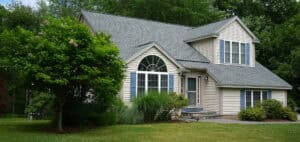
Roof shape matters too. The village Colonials around Meeting House Green are steep, which sheds wind up and over. Beach cottages and their porch roofs are often low-pitched, which lets wind get under the shingle edge and lift.
What does wind damage look like on an asphalt shingle roof?
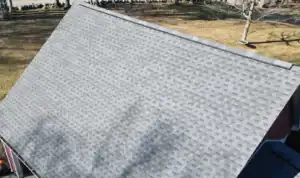
The crease is the one homeowners miss. When a gust lifts a shingle and folds it back, the shingle usually drops back into place when the wind lets up. It looks fine from the yard. But the fold has cracked the mat and broken the seal strip that glues each shingle to the one below, so that shingle is now a loose flap waiting for the next northeast wind. We walk the roof after a storm specifically looking for creases, because replacing six creased shingles now is a small job, and chasing them one at a time over the winter is not.
Edges tell the story next. Wind gets under a roof at the rakes and eaves first, so look at the drip edge and the first course along the bottom. If the metal is bent out or the starter course is showing, water is already getting behind it. Our post on identifying roof edge damage goes through what each of those signs means.
Then the ridge. Ridge cap shingles stand proud of the roof and take wind from every direction, and on a lot of Hampton roofs they are the first thing to go. A cap shingle missing from the peak lets water straight into the ridge vent slot below it.
What should you do in the first 48 hours after a storm damages your roof?
If you have an active leak, that is an emergency and we treat it as one. We walked through how tarping works and how long a tarp holds in our post on emergency storm damage roof repair on the Seacoast, including how to tell the difference between a real emergency and damage that can wait a few days. That post also covers the out-of-state crews who show up in Hampton after every big blow, so we will not repeat it here beyond this: get a second opinion before you sign.
If the roof is not leaking, resist the urge to get up there. A roof after a storm is wet, and shingles that have been lifted once will lift again under a foot. Take photos from the yard, note the date, and keep the shingles you find on the lawn, because they tell us which slope and which course they came from. Then call for an inspection. A missing tab on a dry day is a repair. The same tab after two weeks of rain and a freeze is a repair plus a section of rotten deck.
How do we repair wind-damaged shingles so the repair holds?
The hand-sealing step is what separates a repair that lasts from one that blows off in the next storm. Asphalt shingles carry a strip of adhesive that softens in the sun and bonds the shingle to the course below. In July that happens in a day. In a November repair on a beach roof that gets wind every afternoon, it may not happen before the next storm, so we put a dab of roofing cement under each replaced tab and under the tabs we lifted to get at it. It is the difference between fixing the roof and visiting it.
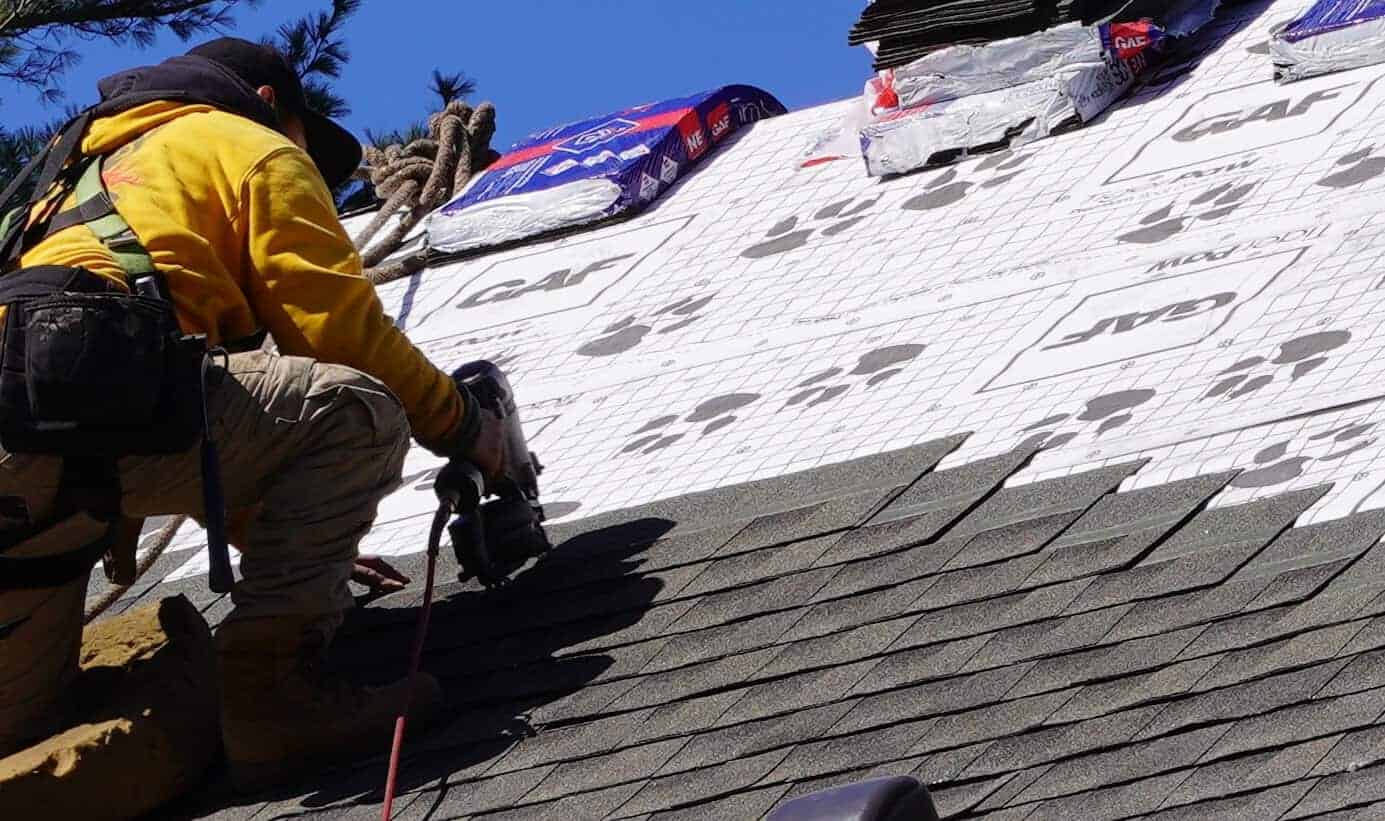
Nailing matters just as much. A shingle that blew off was often holding on with four nails, some of them driven high or at an angle. Our replacements go in with six nails in the line the manufacturer specifies, which is the pattern GAF requires for its high-wind warranty and the pattern we use on every Hampton roof whether the warranty applies or not. We are a GAF Master Elite contractor, and matching the shingle line is usually straightforward, though an architectural shingle that has weathered for a decade on the ocean side of the house will not be an exact color match to a new one. We will tell you that before we start rather than let you discover it from the yard.
While we are up there we check the ridge cap, re-fasten any loose drip edge, and look at the flashing. On older roofs we also pull a few nails near the damage to see how the heads look. Corroded nails on one slope mean the rest of that slope is not far behind.
Repair or replace: when is a wind-damaged roof past repair?
This is the judgment call, and it is the one we are asked about most. A roof loses shingles to wind for one of two reasons. Either the storm was bad enough to beat a sound roof, which happens on Great Boars Head and the beach a couple of times a winter, or the roof’s seal strips have given up and ordinary winter wind is enough. The first case is a repair. The second case is not, because every repair we make is surrounded by shingles that are about to do the same thing.
The test is simple. We bend a shingle. A shingle with life left in it flexes and lies back down. One that is at the end of its life cracks along the bend, and the granules come off in your palm. When that is what the whole slope does, we will show you, and we will recommend a full roof replacement rather than take your money for a repair that cannot hold. Cost is a conversation for the estimate, not a blog post, and for a replacement that was not in the budget this year we offer financing.
There is a middle case worth naming. A roof that is sound on three sides and beaten up on the ocean side can sometimes be re-roofed on that one slope. We do not love it, because the two halves age differently from then on, but on a beach cottage with a limited budget it is an honest option, and we will lay it out next to the full replacement so you can choose.
Does homeowners insurance cover wind damage roof repair in Hampton?
Adjusters draw a line between wind damage and wear and tear, and they are usually right to. Shingles blown off a ten-year-old roof in a named storm look very different from shingles that curled, cracked, and finally let go on a 25-year-old roof in an ordinary breeze. Our photos and write-up tell that story honestly, which is what gets a legitimate claim paid. We do not inflate a scope to cover a deductible, and we will not work with anyone who asks us to.
One practical point: a small repair often costs less than the deductible. When the damage is a handful of shingles, we will say so and you can decide whether a claim is worth filing. When it is a slope, the claim is usually the right move, and we will give you what the adjuster needs.
What makes beach cottages and seasonal homes in Hampton different?
We see the same pattern every spring. An owner opens the cottage for the season and finds a stained ceiling, soft drywall, and a musty smell that has been building since February. The shingle that started it has been in the neighbor’s hedge since the storm that took it. By then the repair involves the deck and the ceiling, not just the roof.
If you own a seasonal place in Hampton, have someone look at the roof from the street after each big storm, or ask us to. We are minutes away in Hampton Falls and a drive-by costs nothing. The other half of the answer is the roof itself. When we replace a cottage roof on the beach blocks, it gets the high-wind nailing pattern, a starter strip at the rakes as well as the eaves, ice and water shield well up the slope, and a ridge cap rated for wind. Our crews also handle the beach-block part of the job: parking on the narrow streets off Ocean Boulevard, staging a dumpster where there is no driveway, and getting the work done between the summer people and the plows.
Who repairs wind-damaged roofs in Hampton, NH?
Wind repairs are a big part of our winter in Hampton. We are on the town’s roofs year-round for roofing in Hampton, so the crew that shows up after a storm has already seen how a roof on the bluff fails differently from one on the marsh side. Gutters usually come off in the same storms, so we handle seamless gutter repair and replacement on the same visit when a section has pulled loose.
The one time we will send you elsewhere: if your roof was installed in the last few years by another company and it just lost shingles, call them first. A reputable installer’s workmanship warranty covers that, and you should not pay us for work someone else owes you. If they are gone or will not come, we will take care of it. Otherwise, schedule a free estimate and we will walk the roof, show you the photos, and give you a straight answer on repair or replacement.
Frequently asked questions
Can a few missing shingles wait until spring?
No. A missing shingle exposes the nail heads and the top edge of the shingle below it, and every rain after that gets under the roof. Through a Hampton winter that water freezes, lifts the shingles around it, and soaks the deck. A same-week repair is a small job. The same spot in April often needs new sheathing.
Why did my shingles blow off when my neighbor’s did not?
Usually age or installation. Seal strips weaken as a roof ages, so a 20-year-old roof lets go in wind a 5-year-old roof shrugs off. Nailing matters too: shingles nailed high or with four nails instead of six hold far less. Exposure is the third factor. A roof one lot closer to the water or facing the open marsh simply takes more wind.
Will the replacement shingles match my roof?
Close, not identical. We match the manufacturer and the color, but a shingle that has weathered for years on the ocean side of a Hampton house has faded, and a new one has not. On an older roof the patch will be visible up close for a season or two before it weathers in. We tell every customer this before we start.
Does wind damage mean my whole roof was installed badly?
Not necessarily. A nor’easter coming over Hampton Beach can beat a well-installed roof. The sign of an installation problem is a pattern: shingles letting go across a slope in ordinary wind, nails driven through the shingle rather than into the nailing strip, or a starter course that was never installed at the rakes. We can tell you which it is after walking the roof.
Should the gutters be checked at the same time?
Yes. The same wind that lifts shingles pulls gutters away from the fascia, and a gutter that has dropped at one end dumps every storm’s water at the foundation. We check hangers and pitch on every wind-damage visit and can repair or replace a section while the crew and the ladders are already on site.