
Spring seems to have a way of uncovering things that winter kept hidden. After months of snow and freezing weather in New Hampshire and Southern Maine, the first heavy rain can quickly reveal where a flat roof is not draining quite like it should. What looked solid during dry days sometimes turns into trouble once the runoff has nowhere to go.
Flat roofs are built differently from pitched ones. Without gravity helping water move quickly off the surface, they rely on drains, scuppers, and slight slopes to guide the flow. If any part of that system gets blocked or damaged over the winter, it usually shows up fast once the spring rains roll through. That is why this time of year is common for calls related to flat roof repair in New Hampshire.
Why Flat Roofs Struggle With Spring Drainage
Flat roofs do not move water the same way as sloped roofs, and that makes drainage management more important. When water stays put, it increases the chances of damage. Every square foot that stays wet breaks down a little faster.
These are a few reasons why drainage problems often show up in spring:
- Flat roofs rely entirely on well-placed drains or scuppers to get water moving off the surface. If those are blocked, water builds up fast.
- Snow and ice from colder months can damage or clog these drainage points, especially if snowmelt refreezes and expands inside pipes or gutters.
- Spring brings sudden downpours, and meltwater from leftover snow combines with rain, giving flat roofs a tough test early in the season.
If the drainage system cannot handle that mix, water starts to collect. You may not notice it right away because standing water sometimes soaks in slowly or sticks around long after the rain has passed. Often, by the time the puddle disappears, the damage has already begun.
Common Signs of Drainage Trouble After Winter
The tricky part is that flat roof damage does not always look dramatic at first. Instead, the signs tend to build up, especially if the weather stays wet for days at a time. Knowing what to watch for can help catch small issues before they grow.
A few warning signs include:
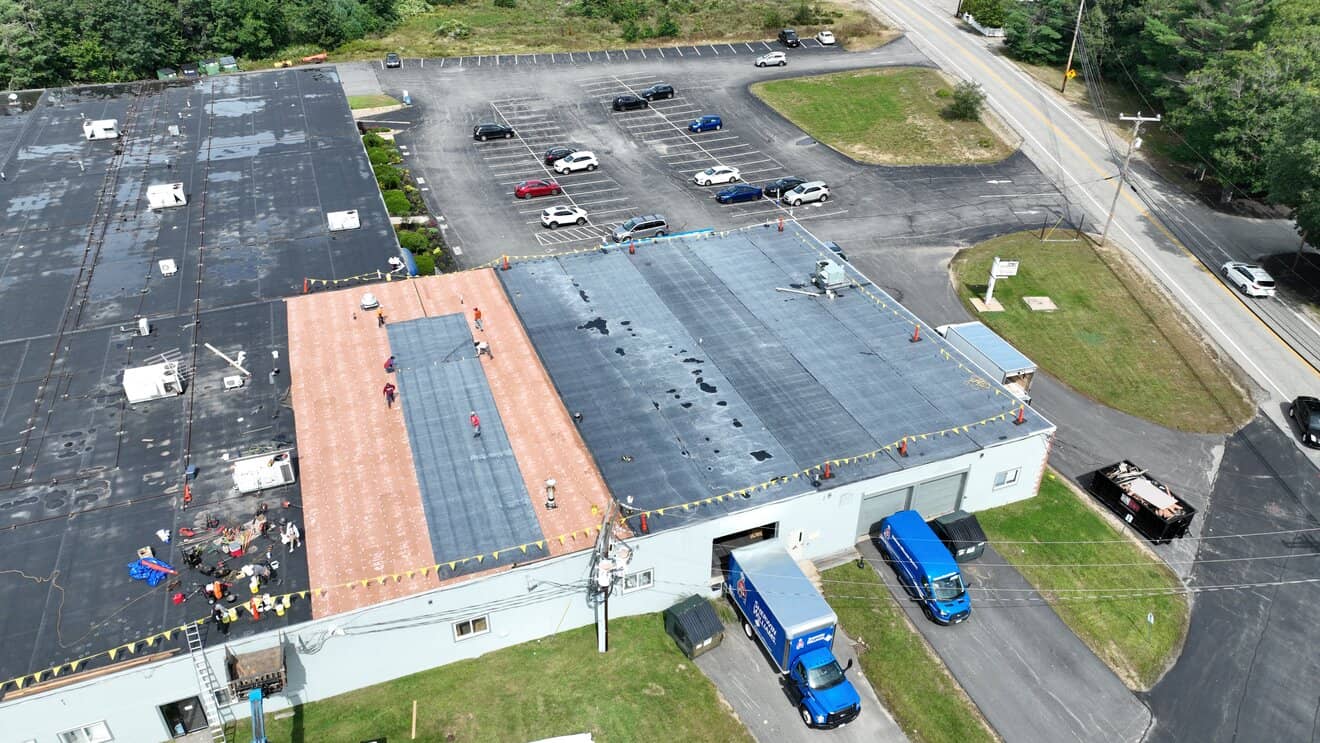
- Large puddles of water that do not drain quickly, especially ones that seem to re-form in the same spots after each rain
- Soft or sagging areas underfoot during a walk inspection, which may point to soaked materials under the surface
- Damp patches forming inside the upper areas of the house or garage, especially where the roof meets the walls
These signs are often easy to miss early in the season. If they keep appearing, it is a good sign water is getting trapped somewhere. That excess weight and moisture speeds up wear on coatings, seams, and supports.
What Causes Drainage Failures to Show Up in Spring
Drainage systems that worked just fine last fall may not be working so well once spring rains arrive. The combination of winter debris, freeze-thaw cycles, and added water volume can push flat roof issues to the surface.
Here is what most often leads to drainage failure around this time of year:
- Leaves, twigs, or grit left over from fall and winter storms clog up roof drains or downspouts
- Material on the roof expands and contracts with temperature swings through the season, pulling apart seams or cracking seals
- Water from melting snow enters small gaps that opened in cold weather, then freezes again overnight, making those gaps wider each time
These problems become easier to spot once spring hits full swing. As snow fully melts and seasonal rainfall increases, anything blocking water buildup comes under pressure. When water has nowhere to go, it forces itself into places it should not be, including interior ceilings and walls.
How Regular Checks Can Prevent Bigger Issues
One of the best habits for property owners with flat roofs is walking the roof early in the season, right after snow and ice have melted away. Those first few weeks of spring give a clear view of how water is behaving up there.
A few things we always recommend checking include:
- Any standing water or signs of previous puddling, like dirt rings or algae marks
- Visible cracks or popped seams near flashing, corners, or roof drains
- Loose materials, especially around areas that slope into scuppers or gutters
Clearing any leaves along drains early in the season can keep water flowing where it should. More importantly, spotting the start of a problem gives you time to fix it well before more rain hits. That is when flat roof repair in New Hampshire tends to make the biggest difference, right between winter melt and the heavy rains of late spring.
A Solid Roof Starts With a Clear Path for Water
When spring rolls in, the first big rain will always test the roof. Water runs to the path of least resistance. If there is any weak point in the system, spring finds it.
That is why early checks matter. Drains, seams, and seals that held up through winter might only show trouble under the steady weight of pooled rainwater. Catching those early signs before real leaks form gives us the chance to protect both the surface of the roof and everything underneath it. With the right care, flat roofs in New Hampshire and Southern Maine can clear water fast and bounce back strong from even the toughest winter.
Flat roofs in New Hampshire face a tough mix of snow, rain, and debris this time of year, and even small drainage problems can turn into bigger issues fast. Keeping water moving as it should begins with knowing what to look for and where to check after a long winter. If something seems off or the roof has not been inspected yet this season, it is a smart time to take a closer look. To stay ahead of repairs, see how we approach flat roof repair in New Hampshire before spring rains cause more trouble. Contact J. Carnes & Son Roofing to schedule a roof check.