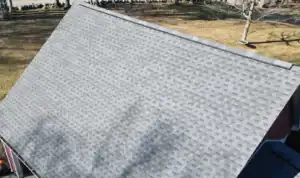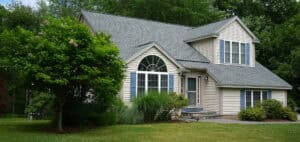

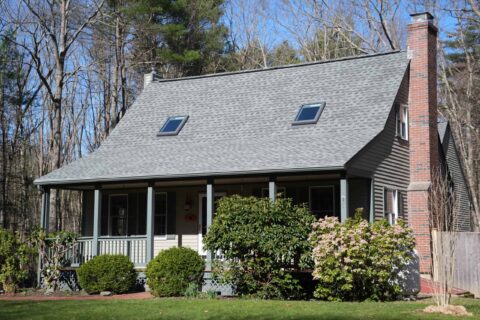
Rye sits closer to open water than any other town we work in. Drive Route 1A from Odiorne Point down past Rye Harbor and Jenness Beach and you can watch what the Atlantic does to building materials in real time: chalked paint, pitted railings, and roofs that age faster on the ocean side than the street side. When we tear off a roof on Ocean Boulevard, the difference between the windward and leeward slopes is obvious before we ever pull a shingle. Salt and wind do not damage a roof evenly, and they do not damage it slowly.
That changes how a roof replacement should be planned. A spec that works fine in Manchester or even five miles inland in Stratham can come up short a half mile from the breakers. This is what we look at, and what we install differently, when the house faces the water.
The short version
- Salt spray corrodes exposed metal first, so flashing, drip edge, and fasteners fail on oceanfront roofs years before the shingles do.
- Rye roofs need shingles rated for 130 mph winds with a six-nail installation pattern, not the standard four.
- Full ice and water shield coverage on the windward slopes stops the wind-driven rain that felt underlayment cannot.
- Aluminum or stainless components beat galvanized steel within about a mile of the ocean.
- Late spring through early fall is the best replacement window, before nor’easter season tests the new work.
What does salt air actually do to a roof in Rye?
People assume the shingles take the beating. Usually it is the metal. Salt is an electrolyte, and when a fog rolls in off the water and condenses on your roof, every piece of exposed steel starts giving up material. We have pulled drip edge off homes near Wallis Sands that looked like lace on the underside while the shingles above it still had ten years of life.
The granule story matters too. Shingle granules protect the asphalt underneath from UV. Constant salt moisture loosens the bond, wind scours the loose granules off, and the ocean-facing slope goes bald early. On inspections we regularly find the seaward slope a full decade older, in condition terms, than the slope facing the road. If your gutters are filling with granules after every blow, that slope is telling you something. Our roof repair and replacement crews see this pattern on nearly every oceanfront job in town.
How does wind exposure change a roof replacement on the Seacoast?
A nor’easter that reads 45 mph at the Portsmouth airport can be gusting well past 60 on the beach in Rye, because there is nothing between your house and the storm except water. Wind does not push a roof off. It lifts it, starting at the eaves and rakes where pressure differences peel the first course loose. Once one shingle tab lets go, the storm has a handle on the next one.
So the spec changes. We use shingles with a 130 mph wind rating, nailed with six nails instead of four, placed exactly on the nail line where they catch both the shingle below and the sealant strip. Starter strips get adhesive at the eaves and rakes, not just the eaves. It costs a little more in labor and it is the difference between a roof that shrugs off a January storm and one that sheds tabs onto the lawn. We wrote about how fast decking problems compound in our post on roof deck replacement timing, and wind exposure accelerates every one of those timelines.
Which roofing materials hold up best near the ocean?
Architectural shingles remain the right call for most Rye homes. They are heavier than the old three-tab style, they interlock better under wind, and the good lines carry algae-resistant granules that fight the black streaking our humid summers feed. Color choice affects heat and curb appeal more than people expect, and we covered the common mistakes in our guide to shingle color errors.
For homeowners planning to stay put twenty years or more, aluminum standing seam is the material the ocean cannot really touch. Steel rusts where salt sits. Aluminum forms an oxide layer and stops. On direct oceanfront exposure that distinction is worth real money over the life of the roof, and it is why our metal roofing installs along the coast are almost always aluminum. Cedar looks right on a shingle-style Rye cottage, but honest advice: it wants maintenance that most owners stop doing by year five.
What should the underlayment and flashing package look like?
Code requires ice and water shield at the eaves. On the water, code minimum is not enough. Wind-driven rain moves sideways and even uphill, working under shingle courses that would never leak in a vertical rainfall. On exposed slopes we membrane the whole plane, then cover the rest with a synthetic underlayment that will not tear out around fasteners the way old felt paper does when a storm gets under a lifted shingle.
Then the metal. Galvanized flashing is the standard inland answer and the wrong answer on the beach. We bend aluminum flashing on site, use stainless or hot-dipped fasteners, and skip any component where dissimilar metals would touch and set up corrosion. None of this shows from the driveway. All of it shows in year fifteen.
When is the right time of year to replace a roof in Rye?
Shingles seal themselves. Each one carries an adhesive strip that softens in the sun and bonds to the course above it, and that bond is most of your wind resistance. Install in warm weather and the roof is fully sealed in days. Install in December and those strips may not bond until April, which means your brand new roof rides out the worst storm season of the year held on by nails alone.
We still do winter tear-offs when a roof has failed and the alternative is interior damage, and we hand-seal in cold weather when we must. But if you are planning ahead, book for the warm window. Rye’s storm calendar is predictable enough: the ocean sends its worst between November and March, and the smart move is a roof that has had a full summer to lock down before it gets tested.
How long will a new roof last this close to the water?
Nobody on the oceanfront gets the number printed on the shingle wrapper. The warranty testing did not happen in salt fog at 60 mph. What closes the gap is everything above: the six-nail pattern, the membrane coverage, the aluminum details, and one more thing people forget, which is attic ventilation. A cooked attic ages shingles from underneath while the ocean works on them from above. Getting intake and exhaust balanced adds real years, on the coast more than anywhere.
Maintenance closes the rest of the gap. An oceanfront roof should get a professional look every couple of years, because small metal failures are cheap to fix early and expensive to find late.
What does a roof replacement cost in Rye?
Any roofer quoting an oceanfront house sight unseen is guessing, and the guess protects them, not you. Exposure drives the spec and the spec drives the price. What we can promise is a firm written number after we have measured the roof, checked the decking from the attic, and walked you through exactly which coastal upgrades your particular exposure justifies. Some Rye houses a few streets back from the water do not need the full oceanfront package, and we will say so.
Start with a free estimate, and if spreading the cost out helps, ask about financing. We have been roofing the Seacoast long enough to have re-roofed some Rye homes twice, and the second roof always goes on easier when the first one was documented and done right. You can see everything we handle for Rye homeowners on our service area page.
Frequently asked questions
How often do roofs need to be replaced in Rye, NH?
Plan on 18 to 25 years for an asphalt shingle roof with direct ocean exposure, longer for homes set back from the water. Aluminum standing seam metal can last 50 years or more. Regular inspections stretch any roof’s life because coastal failures start small, usually at flashing and fasteners.
Do I need special shingles near the ocean?
You need architectural shingles with a high wind rating, ideally 130 mph, installed with six nails per shingle and adhesive-backed starter strips at eaves and rakes. Algae-resistant granules are worth having on the Seacoast. The installation details matter as much as the shingle itself.
Can you replace a roof in winter on the Seacoast?
Yes, when it is necessary, and we hand-seal shingles in cold weather to compensate for sealant strips that will not bond until spring. For a planned replacement, late spring through early fall is better because the roof fully seals before nor’easter season.
Will homeowners insurance cover wind damage to my roof in Rye?
Most policies cover sudden wind damage, like shingles torn off in a storm, but not gradual wear from salt and weather. Insurers look closely at roof age and maintenance history. Documented inspections and prompt repairs make claims go much smoother, so keep records of any roof work.