
North Hampton is a small town with a serious ocean problem. From Little Boars Head to the back side of Post Road, nothing in town sits more than a few miles from salt water, and the homes along Atlantic Avenue and Route 1A take spray on the wind every time the surf is up. We inspect a lot of roofs here, and the ones near the coast do not age like the ones we see twenty miles inland. They age faster, they age unevenly, and they fail in ways a homeowner standing in the driveway will never spot.
The good news is that salt-air damage is predictable. It shows up in the same places, on the same slopes, in the same order, on almost every house. A proper roof inspection catches it while it is still a repair instead of a tear-off. Here is what the ocean actually does to an asphalt roof in North Hampton, what we look for when we get on one, and how to know when it is time to have someone take a look at yours.
The short version
- Salt air holds moisture against shingles, corrodes every piece of exposed metal on the roof, and teams up with coastal wind to strip granules from windward slopes years ahead of schedule.
- The ocean-facing side of a North Hampton roof can be a decade older, in wear terms, than the leeward side of the same house. Judging the whole roof from the driveway misses this every time.
- Fasteners, flashing, drip edge, and pipe boots usually fail before the shingles themselves do. Most coastal leaks we chase start at corroded metal, not torn asphalt.
- Near the coast, once-a-year inspections plus a check after any named storm is the cadence we recommend. Inland on wooded lots, moss and debris are the bigger story.
- An inspection that catches lifted sealant bonds or backing fasteners early usually means a few hundred dollars of repair instead of an early replacement.
What does salt air actually do to asphalt shingles?
People picture salt eating through shingles like acid. That is not really how it works. Asphalt and fiberglass do not care much about salt directly. What salt does is keep things wet. Salt crystals settle on the roof, grab humidity out of the morning fog, and hold a thin film of moisture on the shingle surface long after a dry roof inland would have baked off. A shingle that stays damp sheds granules faster, grows algae sooner, and gives winter ice more to work with.
The second thing salt does is attack metal. Every asphalt roof is full of steel and aluminum: the nails under every shingle, the drip edge along every eave, the step flashing against every sidewall, the chimney counter-flashing, the pipe boots, the ridge vent. Salt air corrodes all of it years faster than inland air does. We pull nails out of ocean-side roofs in this town that have rusted down to half their original shank. A rusted nail loses its grip, backs out, and lifts the shingle above it. Now the wind has an edge to grab.
And the wind gets plenty of chances. The same exposure that salts the roof also loads it. Nor’easters come ashore here with gusts that work shingle sealant strips like a pry bar, and once a bond line cracks, wind-driven rain and salt get under the tab and go to work on the fasteners underneath. Salt, moisture, and wind are not three separate problems on a Seacoast roof. They are one problem that shows up as granule loss on one slope, rust streaks on another, and a lifted tab where you cannot see it at all.
Why does one side of the roof age faster than the other?
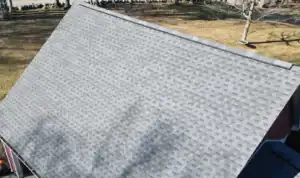
This is the single most common thing we explain to North Hampton homeowners. From the street the roof looks fine, because the street side is the protected side. Get a ladder or a drone on the ocean side and it is a different roof: bald patches at the shingle edges, granules piled in the gutters, rust bleeding from every exposed fastener, sealant strips chalked and cracked.
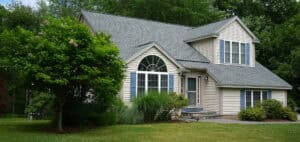
Houses out by the water, in Little Boars Head or along Ocean Boulevard, show this most dramatically. But it holds inland too. The wind that funnels up over the marsh does not stop at Route 1. A colonial on Post Road still has a windward plane and a leeward plane, and the windward one is still the one we find problems on. This is why we treat a coastal inspection as a slope-by-slope job. Averaging the whole roof into one condition rating hides exactly the information the homeowner is paying for.
What do we look for on a North Hampton roof inspection?
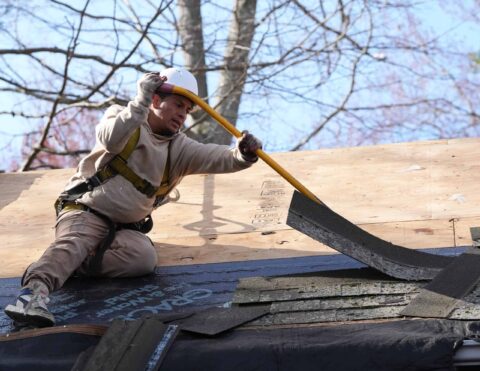
A real inspection is a checklist, not a glance. On the roof itself, we start with the metal because the metal fails first: drip edge, step flashing, chimney flashing, vent stacks, and the fasteners everywhere. Rust streaking down a slope is never decoration. It is a sign the hardware under the shingles is further gone than the shingles are.
Then the shingles, slope by slope. We are looking for the salt-air signature: granule thinning concentrated on the ocean-facing plane, edges starting to curl where the mat has dried out, tabs that lift by hand because the sealant bond let go in a blow two winters ago and never re-adhered. A shingle that lifts silently is more dangerous than one that is visibly torn, because nobody calls us about a shingle that looks fine from the ground. If you have already lost tabs, our guide to replacing missing shingles covers what that repair looks like done right.
Finally the attic, which is where coastal roofs keep their secrets. Moisture staining on the deck, rusty nail tips, compressed insulation, blocked soffit bays. Ocean humidity plus a poorly vented attic means the deck gets attacked from both sides at once. We have written before about attic condensation because it quietly shortens roof life in exactly the homes that can least afford it, and no shingle warranty covers a roof cooked from below.
How often should a coastal roof be inspected?
Inland roofs can get away with an inspection every couple of years while they are young. We do not recommend that near the coast, and North Hampton is all near the coast. The wear mechanisms here are cumulative and quiet. Sealant bonds crack in a February gale but the tab does not blow off, it just sits there unsealed through spring fog and summer humidity, and by the time water finds the nail holes, the stain shows up on a bedroom ceiling in January.
The storm check matters just as much as the annual. After a real blow comes through, walk the property and look for shingle pieces, granule piles at the downspout splash blocks, or anything metal on the lawn. Any of those is reason to get an inspection on the calendar that week, not that season. Wind damage compounds: one lifted tab becomes four the next storm, then a stripped course the storm after that. Our neighbors over in Rye see the identical pattern, which is why we wrote up what oceanfront homes in Rye face from wind and salt. North Hampton is the same ocean with a different zip code.
Repair or replace: how do we make the call?
Nobody wants to hear “replace” a day sooner than necessary, and an honest inspection is what keeps that word out of the conversation for as long as possible. Plenty of the coastal roofs we look at need a few hundred dollars of work: a re-flashed chimney, new pipe boots, a course of shingles on a windward eave, fasteners reset and sealed. Done promptly, those repairs buy years.
What changes the math is when the failures stop being local. Widespread granule loss on the ocean side, shingles that crack when you lift them gently, rust at every fastener line: at that point each repair is a down payment on the next one, and the deck is absorbing risk every month. That is when we start talking about a roof replacement plan, and for exposed sites, sometimes about whether standing-seam metal makes more sense than another round of asphalt against this wind.
What does a roof inspection cost in North Hampton?
Cost questions deserve straight answers, and the straight answer on the Seacoast is that exposure drives everything. A protected cape off Winnicut Road and an oceanfront gambrel at Little Boars Head are different jobs even when the shingle count matches. That is exactly why the inspection comes first and costs you nothing. You get a slope-by-slope picture of where your roof actually stands, with photos, and a clear read on what is urgent versus what can wait a season.
If the answer turns out to be bigger than a repair, we will walk you through the options, including financing, before anyone signs anything. We have been roofing the Seacoast for a long time, we are based one town over in Hampton Falls, and our North Hampton crews are on roofs here every season. Get in touch and we will schedule a look before the next storm does the inspecting for you.
Frequently asked questions
How long do asphalt shingles last near the ocean in New Hampshire?
Architectural shingles rated for 30 years routinely give up their last five to ten on exposed coastal sites, with windward slopes wearing fastest. Protected inland roofs in the same town can run closer to full rated life. Maintenance and attic ventilation move the number more than the brochure does.
Can I inspect my own roof from a ladder?
You can spot obvious problems: missing tabs, rust streaks, granule piles in gutters. What you cannot safely see is sealant bond condition, fastener corrosion under the tabs, or the attic side of the deck. Leave walking a coastal roof to people with harnesses and fall protection. A ground-and-ladder check between professional inspections is smart. Replacing the professional inspection with it is not.
Does homeowners insurance cover salt-air roof damage?
Policies generally cover sudden storm damage, like wind stripping shingles in a nor’easter, and generally exclude gradual wear, which is what salt-air aging is. This is exactly why documented inspections matter: they establish what was storm damage and what was not, which makes any claim you do file much cleaner. Check your own policy for specifics.
What time of year is best for a roof inspection on the Seacoast?
Spring and fall are ideal. Spring shows what winter ice and wind actually did, and fall confirms the roof is sealed and vented before it faces another freeze season. If you have never had one, the best time is now, whatever the month. Storm-chasing damage in January is the expensive alternative.
Do metal roofs handle salt air better than asphalt shingles?
A properly specified standing-seam roof with coastal-rated coatings and stainless or coated fasteners resists salt exposure very well, which is why you see so much metal near the water here. It costs more up front and it is not right for every house or budget. For exposed sites due for replacement, it belongs in the conversation.