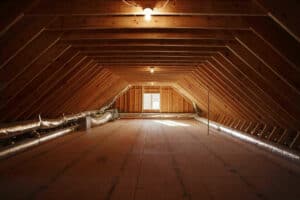

Most homeowners find it by accident. You go up for the holiday boxes and the underside of the roof boards is wet, or every nail point overhead is wearing a little white cap of frost. A week later there is a brown ring on the bedroom ceiling and everyone assumes the roof is leaking. Sometimes it is. More often, on the Seacoast, it is the house itself putting water into the attic, and no amount of shingle work will stop it until the air path is fixed.
We see attic condensation every winter on roofs from Hampton Falls to Dover and up into southern Maine. This page pulls together what we look for on an inspection, what actually causes it, and the order of repairs that makes it stop.
The short version
- Attic condensation looks like frost on nail tips, wet or darkened sheathing, damp matted insulation, and drip spots on the ceiling after a thaw.
- The cause is almost always warm, humid house air getting into a cold attic: bath fans vented into the attic, recessed lights, an unsealed hatch, chimney chases, low insulation and blocked soffits.
- A leak follows a storm and shows up in one spot. Condensation is spread across the roof deck and shows up during a cold snap.
- Stop it in this order: seal the air leaks, insulate to depth, then balance intake and exhaust ventilation. Vent bath and dryer fans outdoors.
- A dehumidifier treats the symptom. Rotted sheathing, mold on the decking or a failed ridge are the points where condensation becomes roof work.
What does attic condensation look like?
Nails are the first place it shows, because a roofing nail conducts cold straight through the deck. On a January morning they turn white. When the weather warms up, that frost melts all at once and drips onto the insulation, which is why a lot of people first notice the problem as a stain that appeared on a sunny day. Other signs we find on inspections:
- Moisture, frost or ice on the underside of the roof sheathing, usually worst on the north side or a shaded slope.
- Dark staining or black spotting on the plywood, a sign of repeated wetting and early mold.
- Water marks scattered across the attic floor rather than one trail from a single spot.
- Buckled or soft sheathing in older cases.
- Peeling paint on the ceiling below, or windows that fog up all winter.
What causes condensation in an attic?
Every house makes water. Showers, cooking, laundry, a dishwasher, even the people living there. In winter the recommended indoor humidity runs roughly 30 to 50 percent, and in a tight house even the low end can be too high for a cold attic. The question is not whether the house has moisture. It is whether that moisture has a path into the attic. The paths we find most often:
- Bath and kitchen fans vented into the attic. Code calls for exhaust fans to go outdoors, not into the attic or a soffit. In older Seacoast homes we still find bath fans, and sometimes dryer vents, blowing straight into the insulation. One of those can frost a roof deck within weeks.
- Recessed lights. Older can lights are basically holes in the ceiling with a bulb in them.
- The attic hatch or pull down stairs with no weatherstripping or insulated cover.
- Chimney chases, plumbing stacks and wire holes, plus the open tops of interior walls. Some of these run straight from the basement to the attic.
- Low or settled insulation that lets the ceiling run warm.
- Blocked soffits. Insulation blown in without baffles often packs the eaves shut, so no fresh air enters at the bottom of the roof.
- Unbalanced vents, such as gable vents mixed with a ridge vent, which can short circuit the airflow so the eaves never get air moving.
Moisture can also come up from below. A damp basement or a slab that wicks ground water feeds humidity into the whole house, and in winter that humidity ends up on the coldest surface it can reach, which is the roof deck. A simple check: tape an 18 inch square of plastic tight to the basement floor or wall and leave it at least 16 hours. Water under the plastic means moisture is coming through the concrete. Good gutters, downspouts that carry water away, and grading that slopes away from the foundation all help.
Is it condensation or a roof leak?
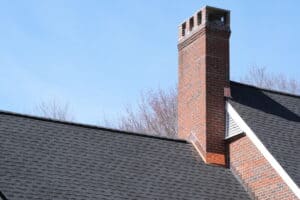
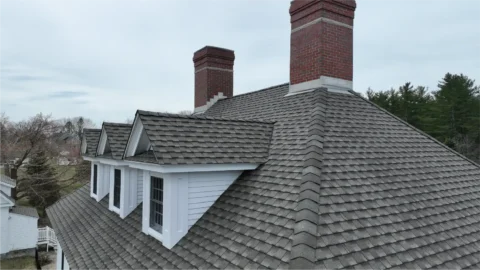
On an inspection we look at both sides of the roof. From inside the attic we check where the water is: one trail running down a rafter from a penetration points to a leak, while even dampness across a whole slope with frosted nails points to condensation. From outside we check the flashing at the chimney and pipes, the valleys, and the ridge. Ice dams blur the line, because a dam backs meltwater under the shingles at the eaves and it can look like condensation from inside. That is one reason it pays to have both sides looked at by the same crew.
Why is attic condensation worse in winter in New Hampshire?
The pattern is predictable. A stretch of single digit nights builds frost on the underside of the deck. Then a thaw comes through and it all lets go at once, which is when homeowners call us about a leak. The heat escaping into the attic is also what drives ice dams at the eaves, so condensation and ice dams usually share a cause. We cover that link in more detail in our guide to roof ventilation and ice dams.
How do you stop attic condensation?
The order matters. Adding vents to an attic that is still full of house air can make things worse, because more airflow pulls more warm, wet air up through the gaps. That is why the most common advice, “just add vents,” so often fails.
1. Seal the air leaks
Caulk or foam around wire and plumbing holes, put airtight covers on recessed lights, weatherstrip the hatch, add an insulated cover over pull down stairs, and seal the gaps at chimney chases with the right fire rated materials. Reroute any fan that ends in the attic so it exhausts through the roof or a sidewall.
2. Insulate to depth
New Hampshire attics generally call for about R-49 to R-60, which is roughly 14 to 18 inches of blown cellulose or fiberglass. A lot of Seacoast homes we open up have far less, often settled and thin at the eaves and around chimneys. Install baffles at the eaves first so the new insulation does not choke the soffits.
3. Balance the ventilation
Intake low, exhaust high, and roughly equal amounts of each. More on how much below.
4. Control the moisture at the source
Run bath fans during and after showers, keep humidifiers turned down in winter, and deal with a wet basement before it feeds the rest of the house.
How much attic ventilation do you need?
On most homes the cleanest setup is a continuous ridge vent paired with open soffit vents and baffles that keep the insulation clear of them. If the house still has gable vents, we usually block them when a ridge vent goes in, because gables can short circuit the flow and pull air from each other instead of from the eaves. Older houses with tight eaves and no soffits can still get intake through a vented drip edge or shingle over intake vents. We walked through how we handle that in our post on attic ventilation for older homes in Dover.
Does a dehumidifier help in the attic?
Summer humidity is a different problem from winter condensation. On a muggy July day, outside air is already loaded with moisture, and an attic that is not moving air holds that dampness against the roof boards. Here the answer is still airflow: open soffits, a working ridge vent, and no bath fans dumping steam into the space. A musty smell, peeling paint on the ceiling below or foggy windows all season are signs the house is holding too much humidity overall.
When does attic condensation mean roof work?
Years of wetting can turn plywood or OSB soft and weaken how well nails hold the shingles down. We have replaced decks that failed from condensation alone. If we find that during an inspection, we will show you, and we will tell you if sealing and insulating is enough on its own. When the deck is sound, it often is. If the damage is local, it may be a roof repair. If the roof is near the end of its life anyway, the ventilation can be rebuilt as part of a full replacement. See our residential roofing services for what that involves.
If you are seeing frost, stains or drips and want a straight answer on whether it is condensation or a leak, schedule a free estimate and we will look at the attic and the roof.
Frequently asked questions
Is attic condensation normal in winter?
A little frost during a hard cold snap can happen in older homes. It becomes a problem when it is widespread, comes back every cold spell, or does not dry out when the weather warms. That points to an air leak or ventilation issue that needs to be fixed before it damages the roof deck.
Can attic condensation cause mold?
Yes. Sheathing that gets wet over and over, especially on the north side where it dries slowly, is a common place for mold to start. Dark spotting on the plywood and a musty smell are the early signs. Stopping the moisture is the real fix. Cleaning without fixing the air path just lets it come back.
Will a new roof fix attic condensation?
Not by itself. New shingles do nothing about warm air leaking into the attic. A replacement is the best time to correct ventilation, adding a ridge vent and opening the intake, but the air sealing and insulation inside the house still have to be done for the problem to stop.
Should I close my attic vents in winter?
No. Closing vents traps the moisture that is already getting into the attic and makes condensation worse. A vented attic is supposed to be cold in winter. The insulation and air sealing at the attic floor are what keep the house warm, not closed vents.
How do I know if my attic has enough ventilation?
Check that you have both intake at the eaves and exhaust at or near the ridge, that the soffits are not packed with insulation, and that the attic is close to outdoor temperature in winter. Frost on the nails, ice dams or a very hot attic in summer usually mean it is not moving enough air.