
Most homeowners only replace a roof once or twice in their lives, so it makes sense that the process feels like a black box. You know a crew shows up, there is a lot of banging for a day or two, and then the house has a new roof. What actually happens in between, and what you should do before that first ladder goes up, is the part nobody explains until the truck is already in the driveway.
We replace roofs all over Portsmouth and the surrounding Seacoast towns, from capes near the traffic circle to colonials in the South End with three layers of history on the deck. This is the walkthrough we give homeowners at the kitchen table: how to tell replacement is really the right call, what the job looks like hour by hour, how long it takes, and how to get your house ready so the day goes smoothly.
The short version
- A full roof replacement means tearing off the old shingles down to the wood deck, fixing any rot, then rebuilding the system in layers: ice and water shield, underlayment, drip edge, shingles, and ventilation.
- Most single-family homes in Portsmouth are torn off and reshingled in one to two days. Complex rooflines, multiple layers, or hidden deck damage can stretch that.
- Replace instead of repair when shingles are failing across the whole roof, the roof is at the end of its lifespan, or repairs are becoming a yearly habit. One damaged slope after a storm is usually just a repair.
- Your prep list is short: clear the driveway for the dumpster and deliveries, move cars out of the garage before the crew arrives, take fragile things off upstairs walls, and cover anything stored directly under the attic rafters.
- Salt air and harbor wind age Portsmouth roofs faster than inland ones, so material choice and fastening details matter more here than they do twenty miles west.
Who does roof replacement in Portsmouth, NH?
Portsmouth has no shortage of trucks with ladder racks, and after a big wind event half of them seem to have Massachusetts plates. The advice we give people, even when they do not hire us, is to pick a roofer who was working here before the storm and will still be here after. A roof carries a workmanship warranty, and a warranty is only as good as the company’s odds of answering the phone in ten years.
We have built our name on the Seacoast doing this one trade. If you want to see how we think about the whole roof system, our roofing services page covers everything we install, from asphalt and metal to the flat rubber roofs on commercial buildings around town.
How do you know a Portsmouth roof needs replacement instead of repair?
The honest test is whether the roof is failing in one spot or failing everywhere. Wind peels a dozen shingles off the windward slope, the rest of the roof is solid, and the shingles are young enough to match: that is a repair, and anyone who tells you otherwise is selling you a roof you do not need yet.
The pattern that points to replacement looks different. Granules collecting in the gutters every time it rains. Shingle corners curling up along the south-facing slopes where the sun does its work. A leak that comes back in a new spot every time it gets fixed. At that point you are not buying repairs, you are renting time, and each storm collects the rent.
Age matters more here than the shingle wrapper suggests. Salt air is mildly corrosive to everything it touches, and the wind that comes up the Piscataqua works shingle edges loose year after year. An architectural shingle roof that might cruise to thirty inland often starts showing real fatigue in its low twenties near the water. We wrote about what that exposure does to oceanfront homes in our Rye roof replacement guide, and Portsmouth gets a slightly gentler version of the same weather.
What actually happens during a roof replacement?
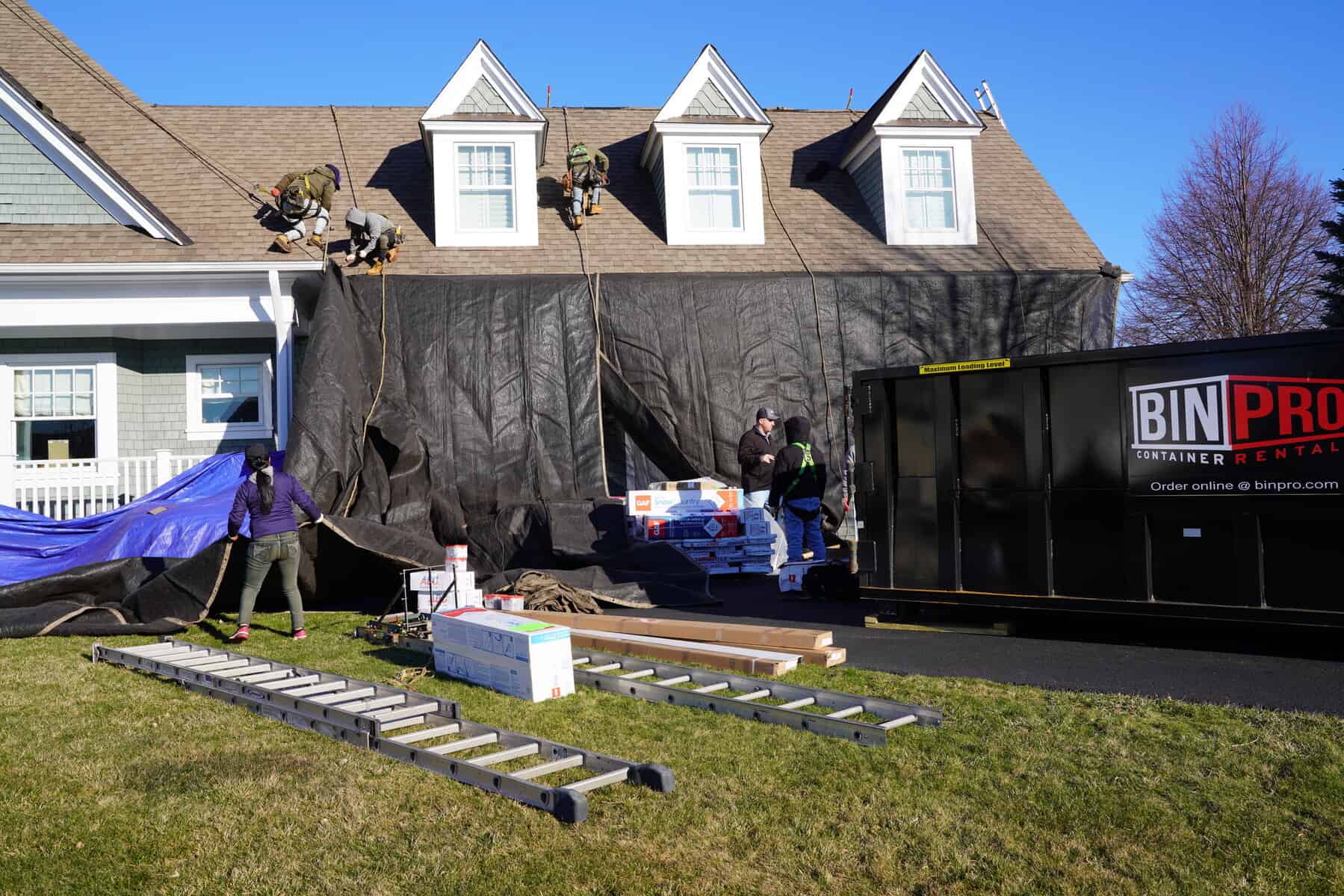
The first hour is all protection. Tarps go down over the landscaping and up against the siding, plywood shields anything delicate, and the dumpster gets positioned so shingles can come straight off the roof and into the container. It looks like a lot of ceremony until you remember that several tons of old roofing are about to slide down the slopes.
Then the tear-off. This is the loud part, and it is also the most important part of the whole job. Stripping to bare wood is the only way to actually see the deck, and the deck is where roofs hide their secrets. Soft plywood around an old chimney. A board deck from the 1940s with a couple of rotted planks under the valley that has been leaking, slowly and invisibly, for years. On older Portsmouth homes we expect to replace at least a few boards, and we photograph anything we find so you can see exactly what you are paying to fix before we fix it.
The rebuild goes fast once the deck is sound. Ice and water shield gets rolled along the eaves and up every valley, which is the layer that stops ice dam backup from getting into the house in February. Synthetic underlayment covers the rest. New drip edge goes on the perimeter, then shingles, then flashing around chimneys and walls, then ridge vent along the peak so the attic can breathe. Ventilation is the step bargain crews skip, and it is half the reason their roofs die young.
Cleanup is the part homeowners remember. Tarps come up, the yard gets walked, and magnetic sweepers roll over the lawn and driveway until they stop finding nails. A crew that leaves nails in a driveway where kids ride bikes did not finish the job, whatever the roof looks like.
How long does a roof replacement take in Portsmouth?
The realistic answer for most houses is one full day of work, sometimes spilling into a second morning. What stretches a job is complexity, not square footage. A plain ranch with two big rectangular slopes goes fast. A colonial with dormers, a couple of valleys, and a chimney through the middle of a slope is slower, because every one of those features is hand work and flashing detail.
Two things add time that nobody can see from the street. Multiple layers, because some older homes have a second roof hiding under the first and both have to come off. And deck repair, which we never know the full extent of until tear-off. When we find something, we show you, we fix it, and the schedule moves a few hours. That beats the alternative of shingling over bad wood and letting you find it through the ceiling in a few winters.
How should you plan and prepare before the crew arrives?
Your list is short but it matters. The dumpster and the shingle delivery both want driveway access, so cars need to be out before we arrive, including anything in the garage you might want during the day, because the driveway will be blocked. Tear-off shakes the frame of the house more than people expect. Pictures on upstairs walls, china cabinets against exterior walls, and anything perched on a shelf under the roofline deserves a safer spot for a day.
If your attic is open storage, throw an old sheet over the boxes. Some grit and dust always sifts through the deck boards during tear-off, especially on older homes with plank decks and gaps. Dogs generally hate roofing day, and a day at a friend’s house is kinder than a day of percussion overhead.
On our side, planning means the permit, the material order, and an eye on the forecast. Portsmouth wants a permit pulled for a full replacement and we take care of that paperwork. As for money conversations, we do them the straightforward way: a free estimate in writing after we have actually looked at your roof, and financing options for the projects that were not in this year’s budget. A roof rarely fails on a convenient schedule, and we quote every job so you know where you stand before anyone touches a shingle.
What makes Portsmouth different from an inland roof job?
Distance to salt water is the quiet variable in every Seacoast roofing decision. Salt spray rides the wind further inland than most people think, and it goes to work on exposed metal first: cheap flashing, bargain fasteners, unpainted steel. That is why we spec corrosion-resistant details on coastal work as a matter of habit, and why a growing number of Portsmouth homeowners skip the debate entirely and go metal. If that route interests you, our guide to metal roofing in Portsmouth covers how standing seam handles salt air.
The housing stock is the other difference. A lot of Portsmouth was framed generations before plywood existed, so we plan on plank decks, real dimensional lumber, and the occasional surprise where three renovations meet. Downtown, homes inside the historic district can need a review before changing what the roof looks like from the street, which is worth knowing before you fall in love with a color. None of this is a problem. It is just the difference between a crew that works these streets every week and one that quotes every house like it was built in 1995.
If your roof is coming due, start with a conversation instead of a guess. Request a free estimate and we will look at the roof, show you photos of what we find, and give you a straight answer on whether this is a repair year or a replacement year.
Frequently asked questions
How often do roofs need to be replaced on the NH Seacoast?
Architectural asphalt shingle roofs near the coast typically deliver twenty to twenty-five solid years, a bit less with direct ocean exposure and a bit more with good ventilation and some shelter from the wind. Standing seam metal roofs run far longer, often fifty years and up. The roof tells you when it is ready: granule loss, curling, and repeat leaks are the signals that matter more than the calendar.
Can you replace a roof in winter in Portsmouth?
Yes. We roof year-round on the Seacoast. Cold-weather installs take extra care because shingle adhesive strips need warmth to seal, so shingles get hand-sealed where conditions call for it, and we watch the forecast so the deck is never open ahead of weather. A failing roof in January should not wait for April.
Do I need a permit to replace a roof in Portsmouth, NH?
A full roof replacement in Portsmouth needs a building permit, and homes in the downtown historic district can also need a review if the roof’s appearance changes. We handle the permit paperwork as part of every replacement, so for the homeowner this is a line item to confirm your contractor covers, not a form to fill out yourself.
What happens if the crew finds rotten decking during tear-off?
We photograph it, show you, and replace the bad wood before any new roofing goes on. Rot hides under old shingles, especially around chimneys, valleys, and eaves where ice dams have worked over the years, so on older homes a few replaced boards are normal. Shingling over soft wood is how a new roof fails early, and we will not do it.
Should I be home during my roof replacement?
You do not need to be. Most of our customers go to work and come home to a finished roof. Being reachable by phone is what matters, so we can show you anything the tear-off reveals and get a quick decision instead of stalling the crew. If you are home, plan around a loud day and a blocked driveway.