
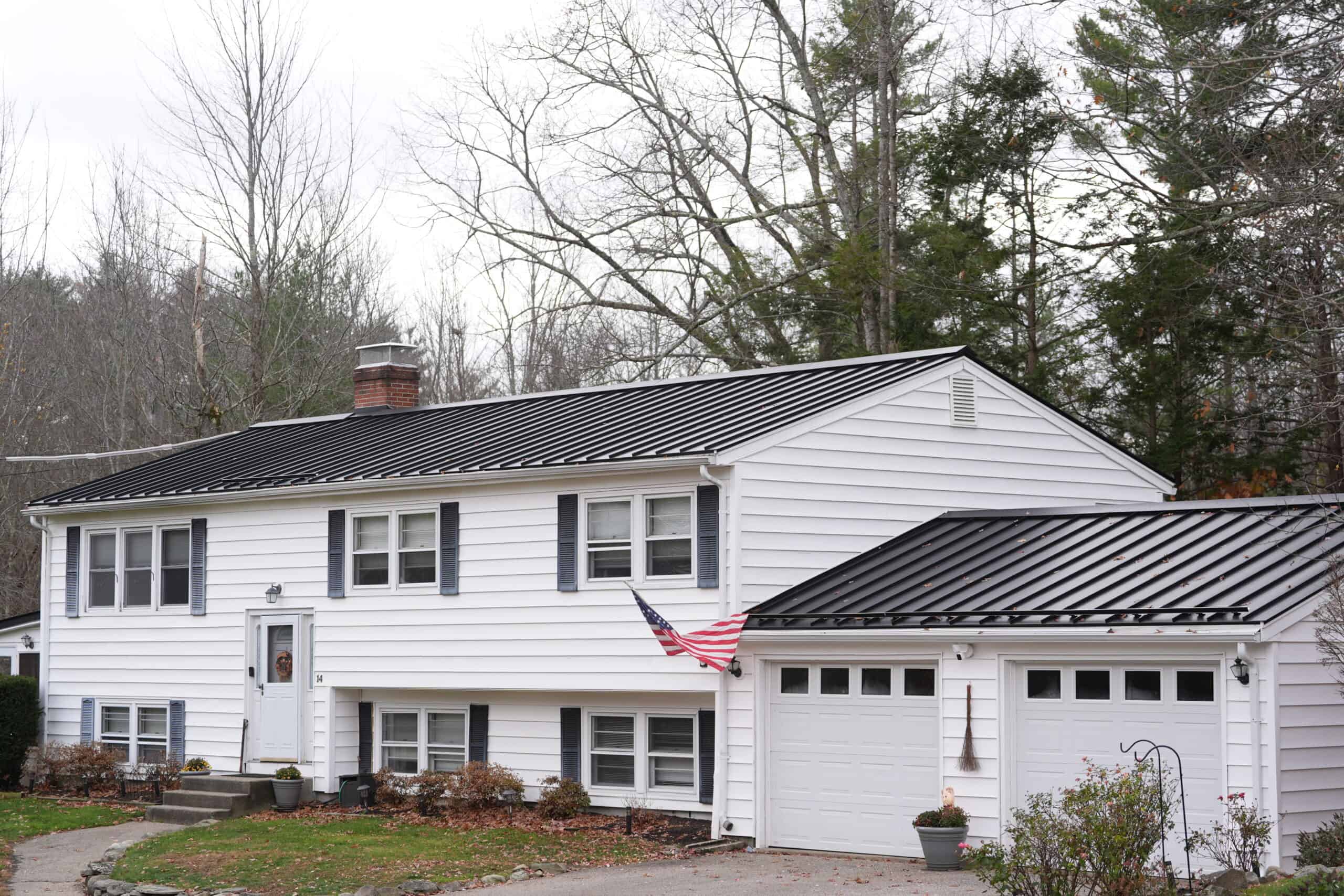
Drive any road within a few miles of the water here, from New Castle up through Rye and into Portsmouth, and count the metal roofs. Ten years ago you would have spotted a handful, mostly on barns and camps. Now they are on capes, colonials, and split-levels all over the Seacoast, and the number grows every season. That is not a style trend. Homeowners near the ocean are making a durability decision, and once you understand what salt air and coastal wind do to a roof, the logic is hard to argue with.
We install both asphalt shingle and standing seam metal roofing across New Hampshire and Southern Maine, so we have no horse in the race. Shingles are still the right call for plenty of houses. But when a homeowner a quarter mile from the water asks us what we would put on our own house in their spot, the answer is standing seam, and this post explains why. It also covers the honest downsides, because a roof you will live under for half a century deserves a straight sales pitch.
The short version
- Standing seam metal roofs have no exposed fasteners. The panels lock together at raised seams and attach with hidden clips, so there are no screw heads or nail penetrations for salt air and wind-driven rain to attack.
- Salt-heavy coastal air corrodes exposed metal fast. Aluminum panels or steel with a marine-grade paint finish stand up to it, which is why material choice matters more within a mile or two of the water.
- Wind resistance is the big coastal win. A properly installed standing seam roof handles nor’easter gusts that routinely strip shingle tabs off oceanfront homes.
- Snow slides off a standing seam roof instead of melting into ice dams, which solves one of the most common winter roof failures we see in New Hampshire.
- The trade-offs are real: higher upfront investment, fewer qualified installers, and some panel waviness called oil canning. A crew that works coastal roofs weekly knows how to manage all three.
What makes a standing seam roof different from other metal roofs?
The word metal covers a lot of ground, and the cheap corrugated panels on an agricultural building have little in common with a residential standing seam system. On a screw-down roof, every one of those face screws carries a rubber washer that bakes, shrinks, and cracks over the years. Each failed washer is a leak waiting for a wind-driven rainstorm to find it. On the coast, salt accelerates the whole process, corroding the screw heads themselves.
Standing seam eliminates that entire category of failure. The panels attach with concealed clips that let each panel expand and contract as temperatures swing, which matters in a state that can see below-zero mornings in January and roof-surface temperatures well past a hundred degrees in July. The seams stand an inch or more above the drainage plane, so the water running down your roof never crosses a fastener or a joint at panel level.
Why do coastal NH homes choose standing seam over asphalt shingles?
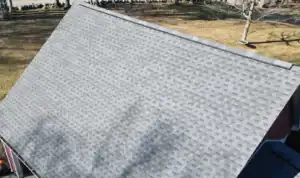
Asphalt shingles are a fine product inland. Get within sight of the Atlantic and their weaknesses start stacking up. Shingle tabs are held down by adhesive strips, and repeated nor’easter gusts work them loose one storm at a time. We replace wind-stripped shingle sections in Rye and New Castle every spring, usually on roofs that are nowhere near the end of their rated life. The ocean does not care about the rating on the wrapper.
Salt air also ages shingles from the surface in. The granule layer that protects the asphalt underneath erodes faster in coastal exposure, and once granules go, the sun finishes the job. A shingle roof a block from the beach simply does not last as long as the same roof ten miles inland. We wrote about this in detail in our guide to metal roofing in Portsmouth, where the harbor-front housing stock takes some of the worst exposure in the state.
Then there is winter. A smooth metal surface sheds snow before it can sit, melt from house heat, and refreeze at the cold eaves as an ice dam. Ice dams are one of the most common causes of winter water damage we get called for on the Seacoast, and standing seam roofs mostly take that problem off the table. The snow ends up in the yard instead of backed up under your roofing.
How does salt air affect a metal roof?
People sometimes hear metal and ocean in the same sentence and picture rust streaks. That happens when the wrong product goes up. Plain galvanized steel close to the water will eventually show its edges, especially at cut ends and around penetrations. That is not a reason to avoid metal. It is a reason to pick the right metal.
Aluminum simply does not rust, which is why it is the default on oceanfront work. Modern coated steel panels with a PVDF finish, the marine-grade paint system most premium manufacturers use, hold up well even in heavy salt exposure, and manufacturers back the finish with long warranties. Where the experience shows is in the details: how cut edges are hemmed, how flashings are folded, what metals touch each other. Mixing incompatible metals, like letting copper runoff hit bare steel, sets up galvanic corrosion that no paint system can stop. A crew that details coastal roofs every week builds these habits in. A crew that mostly does inland shingle work may not know what the salt will find.
How does standing seam handle Seacoast wind and snow?
A nor’easter coming ashore at Hampton or Rye pushes sustained wind at roof planes for hours, not minutes. Shingles resist that with adhesive strips and nails near the tab edge. Standing seam resists it with mechanical interlocks running the full length of every panel and clips fastened straight into the deck. The failure modes are just different animals. After the big wind events, our repair calls are almost entirely shingle roofs. The standing seam roofs we have installed on the Seacoast have come through those same storms without a service call.
Snow behavior deserves a caution, though, because it cuts both ways. Snow leaving a metal roof leaves all at once, in a slide that can bury a walkway or flatten shrubs. Over doors, walkways, and anywhere people pass, we install snow retention, small rails or brackets that hold the blanket in place so it melts gradually. It is a standard detail on our New Hampshire installs, and it is the kind of thing that separates a coastal metal roof done right from a panel job.
Who installs standing seam metal roofs on the New Hampshire Seacoast?
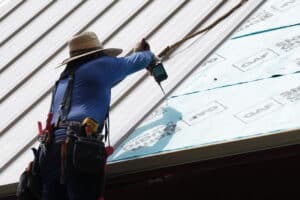
Standing seam is a specialty trade inside a trade. The panels for a proper job are often roll-formed to length, the flashings are hand-folded, and the layout has to account for thermal movement that shingle roofs never deal with. Plenty of good shingle crews will take a metal job and learn on your house. That is the situation to avoid, and it is worth asking any bidder how many standing seam roofs they put on last year and where you can drive past one.
Our answer to that question is all over the Seacoast. We have put standing seam on harbor-exposed homes in Portsmouth, on capes and split-levels from Rye to Stratham, and on camps and farmhouses inland where owners just wanted their last roof. If you want to see what a black standing seam roof looks like on a classic white New England house, the photo on this post is our work, not a stock image.
What should you know before switching from asphalt to metal?
We tell every homeowner the honest version. A standing seam roof costs meaningfully more up front than an architectural shingle roof on the same house. We do not publish numbers because every roof is different, and anyone who quotes you a price without measuring your roof is guessing. What we can say is that the math changes when you think in decades: one metal roof can outlast two or three shingle cycles, and financing lets you spread the investment rather than absorbing it at once. A free estimate gets you real numbers for your actual house.
Two smaller things belong in the honest column. First, oil canning: flat metal panels can show slight waviness in raking light. It is cosmetic, it does not affect performance, and good installers minimize it with panel striations and careful substrate prep, but you should know the term before you shop. Second, the noise myth can die here: over solid decking and underlayment, a standing seam roof in the rain is no louder than shingles. The tin-roof drumming people remember comes from open-framed barns, not houses.
If your shingle roof near the coast is on its second round of wind repairs, or you are planning the roof you never want to think about again, it is worth pricing both options side by side. Our roofing services team quotes shingle and standing seam on the same visit, so you can compare real numbers instead of averages off the internet.
Frequently asked questions
How long does a standing seam metal roof last in New Hampshire?
Fifty years is a reasonable expectation for a properly installed standing seam roof here, and many go longer. The paint finish typically carries a manufacturer warranty measured in decades. Compare that with the real-world life of coastal shingle roofs, which salt and wind often retire early, and the lifetime math favors metal.
Can you install standing seam over existing shingles?
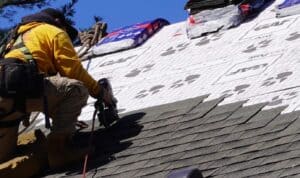
Sometimes, but on coastal homes we usually recommend a full tear-off. Stripping the old roof lets us inspect the decking, replace anything soft, and start with a flat, sound substrate, which also reduces oil canning. A roof intended to last fifty years should not be built on a questionable base.
Is a metal roof loud when it rains?
Not on a house. Residential standing seam goes over solid decking and underlayment, which absorb the sound, so rainfall is about as loud as it is on an asphalt roof. The loud metal roofs people remember are uninsulated panels over open framing on barns and sheds.
What color standing seam roof works best on a coastal home?
Black and dark charcoal are the current favorites on the Seacoast, especially on white and gray houses, and the classic look holds up. Lighter colors reflect more summer heat. Every major panel line offers coastal-rated finishes across its color range, so pick for the house. Just confirm the finish grade, not just the color chip.
Does a standing seam roof need maintenance?
Very little, which is part of the appeal. An occasional rinse of accumulated salt film, keeping valleys and gutters clear, and a look at sealed penetrations every few years covers it. There are no granules to shed, no tabs to re-glue, and no exposed fasteners to re-gasket.