

A roof on Ocean Boulevard in Rye or on Wentworth Road in New Castle does not get the life the shingle wrapper promises. We tell homeowners on every estimate that a thirty-year shingle on a direct oceanfront lot here realistically lasts 18 to 22 years, and the roofs that reach the top of that range are the ones somebody looked after. The ones that come up short rarely fail from one storm. They fail from salt working at the metal, moss holding water on the north slope, a cracked pipe boot nobody saw, and gutters that went two autumns without being cleared.
We have been on roofs in these two towns since 1998, from our shop in Hampton Falls a few miles down Route 1. This is the maintenance routine we give our own customers on the Seacoast: what to check, when to check it, and what should bring a crew out. It applies to the Shingle Style cottages at Wallis Sands and Jenness Beach, the summer estates along Route 1A, the centuries-old homes on Great Island, and the Capes a mile or two inland that still get the salt on a southeast wind.
The short version
- Salt air, nor’easter wind and freeze and thaw cycles take years off a roof in Rye and New Castle. A roof within sight of the water needs a look twice a year and a walk-around after every big blow.
- The metal fails before the shingles on an oceanfront roof. Fasteners, flashing, drip edge, pipe boots and ridge vents are where salt does its work, and they are the cheapest things to fix early.
- Moss and black streaks are water problems before they are cosmetic ones. Do not pressure wash a shingle roof. Brush it, treat it, and add a zinc strip at the ridge.
- Gutters are roof maintenance. Clear them after the spring pollen drop and again after the leaves are down, because an overflowing gutter rots the fascia and the eave decking from below.
- Maintenance has a limit. A 20-year-old oceanfront roof with bare spots and granules in every gutter is a replacement conversation, and we will say so rather than sell you another season of patching.
Why does a roof wear out faster in Rye and New Castle than ten miles inland?
Rye has about eight miles of open Atlantic shoreline, the longest in New Hampshire, and New Castle is an island with water on three sides. Salt-laden air does not need a storm to do damage. It settles on the roof every humid day, and every nail head, flashing seam and piece of drip edge starts to pit years before the shingles give out. We pull old roofs off houses near Odiorne Point and find fasteners you can snap with your fingers under shingles that still look passable from the driveway.
Then the wind. A nor’easter on this coast hits the same slope every time, and on the oceanfront homes the east and southeast-facing slopes age a full five years ahead of the lee side. We covered what that wind does to shingles in our post on wind damage roof repair in Hampton. Finally, winter: a damp coastal January swings above and below freezing more often than Concord does, and every swing works at the seal strips and the granule bond. A shingle roof can still last here. It needs attention on a shorter cycle and the right details from day one.
What should a coastal roof maintenance schedule look like?
We keep it simple because a routine people follow beats a thorough one they skip. The spring visit happens once the pine and oak pollen has finished coating everything, usually late May on the Seacoast: gutters cleared, the roof looked over for anything winter lifted or cracked, ridge and soffit vents checked for debris. The fall visit comes after the leaves are down in November: gutters again, then a close look at every sealant joint, flashing and pipe boot before the freeze locks everything in place, and a look in the attic.
The third piece is reactive. After any storm that made the news, walk the property. Shingle tabs on the lawn, granules piled at the downspout outlet, a piece of ridge cap in the driveway or a flashing strip hanging at a dormer are reasons to call that week. Our post on emergency storm damage roof repair on the NH Seacoast covers the first 24 hours if water is coming in. For oceanfront roofs we also recommend a professional inspection once the roof passes the ten-year mark, then every couple of years. Our post on roof inspections in North Hampton walks through that visit.
How do you keep salt from eating the fasteners and flashing?
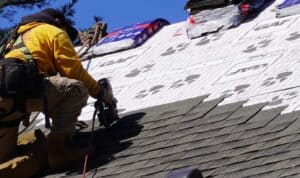
Most of what fails on a Seacoast roof is a few dollars of metal. Standard galvanized nails and painted steel flashing are fine in Epping. On Route 1A they are a liability. When we replace an oceanfront roof we spec stainless fasteners and corrosion-resistant flashing throughout and explain why on the estimate, because it is a line a low bidder quietly leaves out. You will not see the difference for eight years. Then you will.
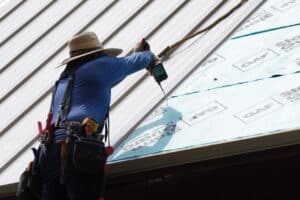
On a roof that is already up, salt maintenance means keeping metal covered. The exposed nails on the last ridge cap and the top edge of step flashing get sealant at install, and that sealant does not last the life of the roof in salt air, so renewing those joints is part of the fall visit. Pipe boots, the rubber collars around plumbing vents, split faster in the sun and salt here and are the most common leak we repair on a roof under 15 years old. Counter-flashing on the old brick chimneys in New Castle pulls away from the mortar joint and needs resealing on a cycle. And rusty drip edge at the eave is wicking water back under the first course, so we replace it rather than paint it. These are small jobs, the kind on our roof repair page.
What do moss and black streaks mean on a Seacoast roof, and how should you handle them?
Humid air off the water and shade from the oaks and pines on the inland Rye lots make the north and east slopes a moss farm. We covered the biology in our post on why moss grows between shingles on coastal homes. The practical side: the mat holds water like a sponge, keeps the shingle wet for days after a rain, and lifts the lower edge of each tab so wind can get under it. The fix is a soft brush on a dry day, working down the slope, a roof-safe moss treatment, and a strip of zinc or copper just below the ridge cap so rain keeps the slope clean.
The black streaks on your roof are algae feeding on the limestone in the shingle. They do not shorten the roof’s life much, but they are a sign the roof stays damp, and the GAF Timberline HDZ shingles we install carry algae-resistant granules for that reason. What you should never do, on either problem, is let someone pressure wash the roof. We have torn off five-year-old roofs that a cleaning company blasted the granules off of in an afternoon. If a maintenance plan starts with a pressure washer, find another contractor.
Why are the gutters part of roof maintenance here?
Homeowners think of gutters as a yard-drainage item. We think of them as the bottom edge of the roof, because that is where they fail it. A gutter full of oak leaves and pine needles overflows at the back, against the house. That water soaks the fascia, rots the rafter tails, and wicks into the decking under the starter course, the one spot on the roof you cannot see from the ground or the attic. Salt speeds this up by eating gutter spikes and hangers, which is why we hang seamless gutters on hidden screw hangers on the coastal homes, as we described in our post on seamless gutters in Hampton Falls.
For the wooded lots off Brackett Road and Washington Road in Rye, a good leaf guard pays for itself in skipped ladder trips; see our gutters and leaf guards page. When you clean the gutters, look at what came out. A layer of granules on a roof under ten years old is normal shedding. The same layer on a roof past fifteen is the shingles telling you something.
What should you check after a nor’easter?
Every big storm on this coast produces the same handful of injuries, and you can spot most of them from the lawn with binoculars. Start with the windward slope. A shingle that lifted and settled back will show a crease or a slight wave across the tab, and a creased shingle has a broken seal that will go next time. Look along the ridge for caps that shifted, at every dormer sidewall and chimney for a flashing strip that lifted, and in the yard for whole tabs.
Then go inside. The attic on a bright day after a storm is where the real damage shows: a pinpoint of daylight near a dormer, a dark patch on the underside of the decking, insulation damp to the touch under a valley. Photograph those and call us, because an insurance adjuster wants them dated. And do not let anyone who knocks on your door the morning after the storm onto the roof. The storm chasers come through Rye and the harbor towns after every event, and more than one roof that needed a few tabs has been sold a full tear-off.
What does winter maintenance mean on a coastal roof?
Ice dam season is where the older Rye and New Castle homes get hurt. A Shingle Style cottage from 1905 at Jenness Beach was built with a cold, open attic, and somewhere in the last century someone blew insulation into it and finished a bedroom under the eaves. Now heat leaks into the roof deck, snow melts from underneath, water runs to the cold overhang and freezes, and the dam backs water up under the shingles. The maintenance half of that is on the ground: a roof rake to pull the first few feet of snow off the eaves after a big storm, and a look at the eave line on a cold morning for a ridge of ice.
The lasting fix is in the attic: air sealing, insulation that does not block the soffits, and ridge and soffit ventilation that moves air, as we explain in our posts on why roof ventilation matters in New Hampshire and on attic condensation, the other winter problem you will see as frost on the nail tips in January. On the roof itself, ice dam protection goes on at replacement, not as maintenance: ice and water shield from the eave up past the warm wall line and in every valley.
Which roof details fail first on the older Rye and New Castle homes?
A Cape in a newer Rye subdivision has four edges and a ridge. A summer estate on Ocean Boulevard or a house near Cranfield Street in New Castle can have six dormers, two chimneys, a porch roof pitched lower than the main roof, and an ell added in a different century. On the maintenance walk we spend most of our time at the dormer sidewalls, where step flashing is often buried under siding that has been replaced twice, and at the chimneys, where the counter-flashing cut into re-pointed brick may have pulled loose. The low-pitch porch and ell roofs are the other weak point, because a shingle roof under about a four-in-twelve pitch holds water long enough for wind to drive it uphill under the tabs.
These homes also need period-appropriate work, and the village district commissioners in Rye Beach and the historic district in New Castle expect it. How we handle those rooflines is on our Rye roofing page and our New Castle roofing page. One more: on the older homes a skylight is usually a 1980s or 1990s addition whose flashing kit is now the oldest thing on the roof, and it is often the leak everyone blames on the chimney.
When is maintenance no longer the answer?
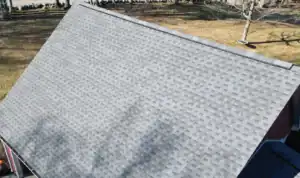
We would rather keep a roof going than replace it, and a good routine will push an oceanfront shingle roof to the top of its range. But there is a point where we stop selling repairs. Dark bald spots across a slope mean the asphalt is taking the sun directly and the shingle is on a short clock. Shingles that crack rather than flex when we lift a tab have lost their oils. Curling edges across a slope cannot be sealed back down. A soft spot underfoot means the decking is wet, which means the leak is older than the stain. On a Rye or New Castle oceanfront home, two of those on a roof past 20 years is the line.
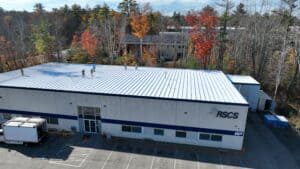
What the replacement involves, including the choice between a GAF shingle roof installed with the stainless fasteners and marine flashing this coast needs and a standing seam metal roof, is in our post on roof replacement in Rye. For the homes that take the brunt of every storm, our standing seam metal roofing page explains why metal is the lowest-maintenance roof you can put on the oceanfront. We do not quote prices in a blog post because every roof here is different, and the financing page covers how most customers handle a replacement that arrives a few years early.
Who maintains roofs in Rye and New Castle, and what does a visit include?
We have worked on roofs from Odiorne Point to Fort Constitution for more than 25 years, and the crews who do the maintenance visits are the same crews who do the replacements. The visit starts on the roof: shingle condition slope by slope, every ridge cap, flashing and pipe boot, the skylights, the fasteners and drip edge. Then the gutters get cleared and the downspouts flushed. Then the attic, for staining, daylight, damp insulation, blocked soffits and frost. You get photos, a plain list of what we recommend and why, and a straight answer about whether this is a maintenance roof or a replacement roof.
What we do not do is upsell a roof that is doing its job. A ten-year-old roof that needs two pipe boots and a tube of sealant gets two pipe boots and a tube of sealant. Our roofing services page describes everything we handle, and our post on GAF Master Elite contractors in New Hampshire explains what the certification means for the warranty on any roof we install. If your Rye or New Castle roof is past the ten-year mark and nobody has been up there, request a free estimate or call us at (603) 686-7763 and we will put it on the schedule before the winter does.
Frequently asked questions
How often should an oceanfront roof in Rye be inspected?
Look it over yourself twice a year, spring and fall, and after every major storm. Once the roof passes ten years old, have a roofer inspect it every couple of years. The fasteners, flashing and pipe boots on a salt-exposed roof start failing well before the shingles look worn, and a professional catches those from the roof and the attic.
Should a 20-year-old roof on the NH Seacoast be replaced?
Not automatically. If the shingles still flex, the granules are intact and the only problems are details like flashing and boots, it is a maintenance roof. If the roof is past 20 years on an oceanfront lot and shows two of these signs, bare patches, cracking tabs, curling across a slope, or a soft spot, it is a replacement roof. We tell you which one it is.
Can I pressure wash moss off my shingle roof?
No. A pressure washer strips the granules that protect the asphalt from the sun and can take years off a roof in one afternoon. Brush moss off by hand on a dry day, working down the slope, apply a roof-safe treatment, and install a zinc or copper strip below the ridge so rain keeps the slope clean.
What is the best type of roof for a New England coastal home?
For most Rye and New Castle homes, a GAF architectural shingle roof installed with stainless steel fasteners, marine-grade flashing and ice and water shield at the eaves and valleys. For homes that take direct oceanfront wind, standing seam metal with no exposed fasteners is the longest-lived and lowest-maintenance option.
Do you offer a roof maintenance plan in New Castle and Rye?
Yes. We schedule spring and fall visits for Seacoast homeowners that cover the roof surface, flashing and penetrations, gutters and the attic, with photos and a written list of findings. Many customers add a post-storm check after a major nor’easter. Call (603) 686-7763 or request a free estimate and we will set up the schedule.