
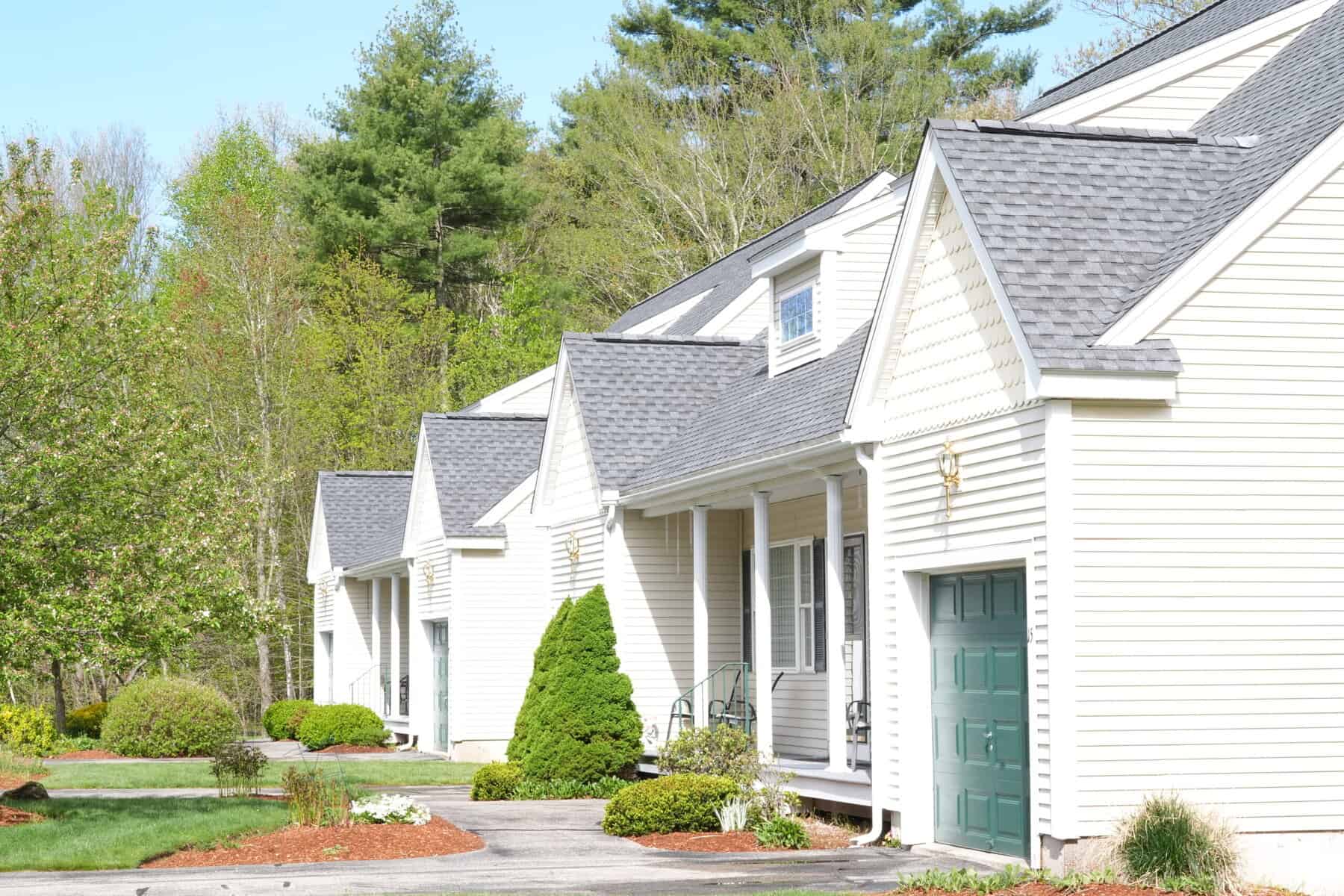
New Hampshire will not vet your roofer for you. There is no state roofing license, no exam and no contractor board, so the screening falls to the homeowner. In Exeter and Kingston that job is harder than it is in most towns. So many of the houses are old, so many sit under big trees, and a fair number sit inside a historic district where the town has a say in what goes on the roof.
We have been roofing in both towns since 1998 from our shop in Hampton Falls, about fifteen minutes from downtown Exeter. This is the order we would check things in if we were hiring a roofer for our own house on Front Street or out past Great Pond. None of it takes long, and most of it happens before anyone sets up a ladder.
The short version
- Start with what you can prove: a shop you can drive to, insurance sent straight from the agent, and years of work under the same business name. New Hampshire has no roofing license to look up.
- Ask what the roofer has done on houses like yours in your town. A Federal on the Plains in Kingston and a 1990s colonial off Route 125 are two different jobs.
- If your home sits in a historic district, the roofer should bring it up before you do. Kingston’s Historic District Commission meets once a month, so a late application can hold up a start date.
- The contractor handles the building permit, not you. A roofer who suggests skipping the town is showing you how the hidden parts of the job will go.
- A real estimate includes a walk on the roof and a look in the attic, and it ends with a written scope. A number given from the driveway is a guess.
What should you check first when hiring a roofer in Exeter or Kingston?
Here is the order we would work in:
- A real local address. Somewhere you can drive past next year if the roof needs attention.
- Insurance from the source. General liability and workers’ compensation, with the certificate sent by the agent and not handed over as a photocopy.
- Time under one name. How long the company has been roofing in this area without changing what it calls itself.
- Work on houses like yours, in your town. Old house or new, village lot or wooded back road.
- The town’s process and the estimate visit. Historic district, building permit, and whether anyone looks at the roof and the attic before quoting.
The order is on purpose. The first three take one phone call each and they clear out most of the bad options. The last two cost you an hour or so per company, so save them for the two or three roofers who pass the first round.
We have already written up the general questions, like insurance paperwork, what belongs in a quote and how warranties work, in our guide to choosing a roofing contractor in Stratham. Everything in it applies here too. The rest of this post covers the checks that are particular to Exeter and Kingston.
Why does the age of your house change who you should hire?
Exeter was settled in 1638 and Kingston was chartered in 1694, and both towns kept a lot of what was built in the two centuries after. In Exeter that means the Georgian and Federal homes along Front Street and the Greek Revivals on High Street and Park Street. In Kingston it means the Federal and Greek Revival houses along Main Street on the Plains, and the carriage era estates near Bartlett Street that still have their carriage houses and outbuildings.
Roofs on houses like these were framed and sheathed long before plywood. The deck is usually wide boards with gaps between them. There may be a second layer of shingles under the one you can see. The attic was never built to breathe the way a modern one does, and the chimney flashing has often been patched with tar more than once. None of that is a problem for a roofer who expects it. All of it is a problem for one who finds out halfway through the tear off.
So ask every company the same question: what do you expect to find under my shingles, and what happens if the decking is worse than it looks? A good answer is specific. The roofer should be able to tell you how many layers are on the house from a look at the roof edge, how board replacement is written into the quote so it is not a surprise, and whether the chimney gets new flashing or another bead of sealant.
Newer homes need a different conversation. In the subdivisions on the edges of Exeter and along Route 125 in Kingston, whole streets were roofed in the same few years with the same builder grade shingle, and they tend to wear out together. On those houses the questions are about what goes under and around the new asphalt shingles: ice and water shield at the eaves and in the valleys, and enough intake and exhaust in the attic to keep the roof deck cold in winter. We cover how that works in our posts on attic ventilation in older homes and how ventilation prevents ice dams.
Is your house in a historic district, and does the roofer know what that means?
Kingston spells its process out. The town’s Historic District Commission certifies that work in the historic district zones meets the ordinances the voters adopted. It takes a Certificate of Approval application, and it meets on the second Tuesday of each month at 7 pm at Town Hall. That calendar matters more than people think. Miss one meeting and you wait for the next, which is a long month in October when you are trying to get a roof on before the snow.
In Exeter, the homes on and around Front Street and the downtown along Water Street sit inside local districts, and properties there may have preservation review requirements. The town offices are at 10 Front Street. Before you sign anything, ask the town whether your address is inside a district and whether a change of roofing material or color needs review.
As a rule, replacing a roof with the same material in a similar color is the simpler conversation with any historic commission. A change of material is the one to raise early, before a deposit is paid and a start date is promised.
Here is how to use this as a screening tool. At the first visit, see whether the roofer asks if the house is in the district before you mention it. That one question tells you they have worked in town before. The answer you do not want is that nobody checks. The roofer should also be ready to help with the application by supplying the product information and color samples a commission wants to see.
Who pulls the building permit, and what does that tell you?
In Kingston, permits run through the Building Inspector’s office at Town Hall on Main Street, and applications are filed online. The department has posted notice that reviews can take at least 10 to 15 business days during its busy season. That is worth knowing in the fall, when everybody wants a roof done before winter and the schedule is already tight. In Exeter, the building department at the town offices answers the same question for your address.
That is the contractor’s paperwork, and on our jobs we treat it that way. You should not be filling out forms or standing at a counter. What you should do is ask about it, because the answer is revealing. A roofer who knows the lead time in your town has been through the process there. A roofer who waves the question away has either not worked in town or does not plan to involve the town at all.
Keep one thing in mind. A permit checks the work, not the person doing it. It does not replace the insurance and track record checks. It is one more sign of how a company handles the parts of the job you will never see from the ground.
How do you verify a roofer in a state with no roofing license?
The words licensed and insured on a yard sign are half marketing in New Hampshire, because there is no roofing license to hold. The insured half is the half you can confirm, and workers’ compensation is the part people forget to ask about. If someone is hurt on your roof and the company has no coverage, the search for a responsible party can end at your front door.
Certifications work the same way. Do not take a logo on a truck as proof. We are a GAF Master Elite contractor and a GAF President’s Club award winner, and we would still tell you to look us up on GAF’s own contractor listing and not take our word for it. Our post on GAF Master Elite contractors in New Hampshire explains what the certification covers and how to check any roofer who claims it. A company’s Better Business Bureau profile is another record you can read without talking to a salesperson.
Reviews are the last piece. We carry a 4.9 star rating across more than 370 Google reviews, and the number is not the useful part. Read the reviews from the last year or two, look for jobs in Exeter and Kingston, and notice how a company answers the unhappy ones. Then ask for an address or two near you that you can drive past. A roofer with real work in town will have them.
What should the estimate visit include?
Our estimates are free and in writing, and they come after we have walked the roof. We look at attic insulation and ventilation on every inspection, because in this part of New Hampshire the attic decides whether a new roof gets ice dams or not. If a salesperson never asks to see your attic, the quote is missing half the information.
Trees are the other thing a good estimate accounts for in these two towns. Kingston is heavily wooded, with mature hardwoods along the Plains and on the country roads around Great Pond. Exeter has the same conditions on the wooded lots off Route 27 and Route 111 and along the river. Leaves and needles pile up in valleys and gutters, hold water against the shingles, and feed moss on the shaded slopes. Ask how the scope deals with the valleys, and whether the gutters are part of the conversation. Our post on gutter guards for tree lined streets in Kingston goes into that, and so does our gutters and leaf guards page.
When the written estimate arrives, look for these lines:
- How many layers come off, and that the roof is stripped to the deck.
- How damaged decking is handled and how that work is priced if it is needed.
- Where ice and water shield goes, by location, not just the words “as needed.”
- Whether flashing at the chimney, walls and valleys is replaced or reused.
- What is being done about ventilation at the ridge and the soffits.
- Cleanup, including nails in the lawn and the driveway.
- The permit, and who is handling it.
- The manufacturer warranty and the workmanship warranty, each named.
If two quotes are far apart, the difference is almost always in that list. Compare the scopes line by line before you compare the totals. And if the right scope costs more than you planned for, ask about financing before you start cutting lines out of it.
How close should your roofer be, and why does it matter after the job is done?
Our shop is in Hampton Falls, about fifteen minutes from Exeter, and Kingston is the next stretch inland from there. We bring that up because distance is a fair thing to ask any roofer about. After every big wind event, trucks with out of state plates work their way through Seacoast towns knocking on doors. Some of those crews do decent work. None of them will be around in February when a valley starts to leak.
Ask whether the company does repairs at all. Some only want full replacements. We do both, and we think a roofer who fixes leaks for a living builds better roofs, because that roofer sees how they fail. If you need help right after a storm, our emergency storm damage post explains what to do first, and our roof repair page covers the smaller jobs.
When should you keep looking, even if that means not hiring us?
Get two or three quotes from companies that have already passed the checks above. More than that and the scopes get hard to compare honestly. If another local roofer has done three houses on your street and your neighbors are happy, that is exactly the track record this post tells you to look for. Hire them.
The same goes for the size of the job. Sometimes the right answer is a repair, or nothing at all for another few years. A roofer who looks at a twelve year old roof with one bad pipe boot and recommends a full replacement is not someone to hire for the replacement either. We would tell you to fix the boot.
If you would like us to be one of your quotes, we are glad to come out. You can read more about our work on the Exeter roofing and Kingston roofing pages, see the full list of roofing services we offer, and meet the people who would be on your roof on our team page. To get on the schedule, request a free estimate or call us at (603) 686-7763. We will walk the roof, look in the attic and put the scope in writing.
Frequently asked questions
Does New Hampshire license roofing contractors?
No. New Hampshire has no statewide roofing license, exam or contractor board. Your screening tools are a local address, proof of general liability and workers’ compensation insurance sent directly by the insurance agent, manufacturer certifications you can look up yourself, and a long track record under one business name.
Do I need approval to replace a roof in Kingston’s historic district?
Work in Kingston’s historic district zones goes through the town’s Historic District Commission, which takes a Certificate of Approval application and meets on the second Tuesday of each month at Town Hall. Contact the commission or Town Hall before you sign a roofing contract so the review does not delay your start date.
Who should pull the building permit for a roof replacement in Exeter?
The roofing contractor should handle it. Whether your job needs a permit is decided by the town’s building department, so ask the town about your address and ask each roofer how they handle the process. A contractor who suggests skipping the town to save time is one to cross off the list.
How many roofing quotes should I get in Exeter or Kingston?
Two or three, from companies you have already screened for insurance, local work and time in business. Compare the written scopes line by line before you compare the totals. Most large gaps between quotes come from differences in decking, flashing, ice and water shield or ventilation.
Does J. Carnes & Son Roofing work in both Exeter and Kingston?
Yes. We have roofed homes in both towns since 1998 from our shop in Hampton Falls. Estimates are free and in writing, and they come after we have walked the roof and looked in the attic. Call (603) 686-7763 or request an estimate through the contact page.