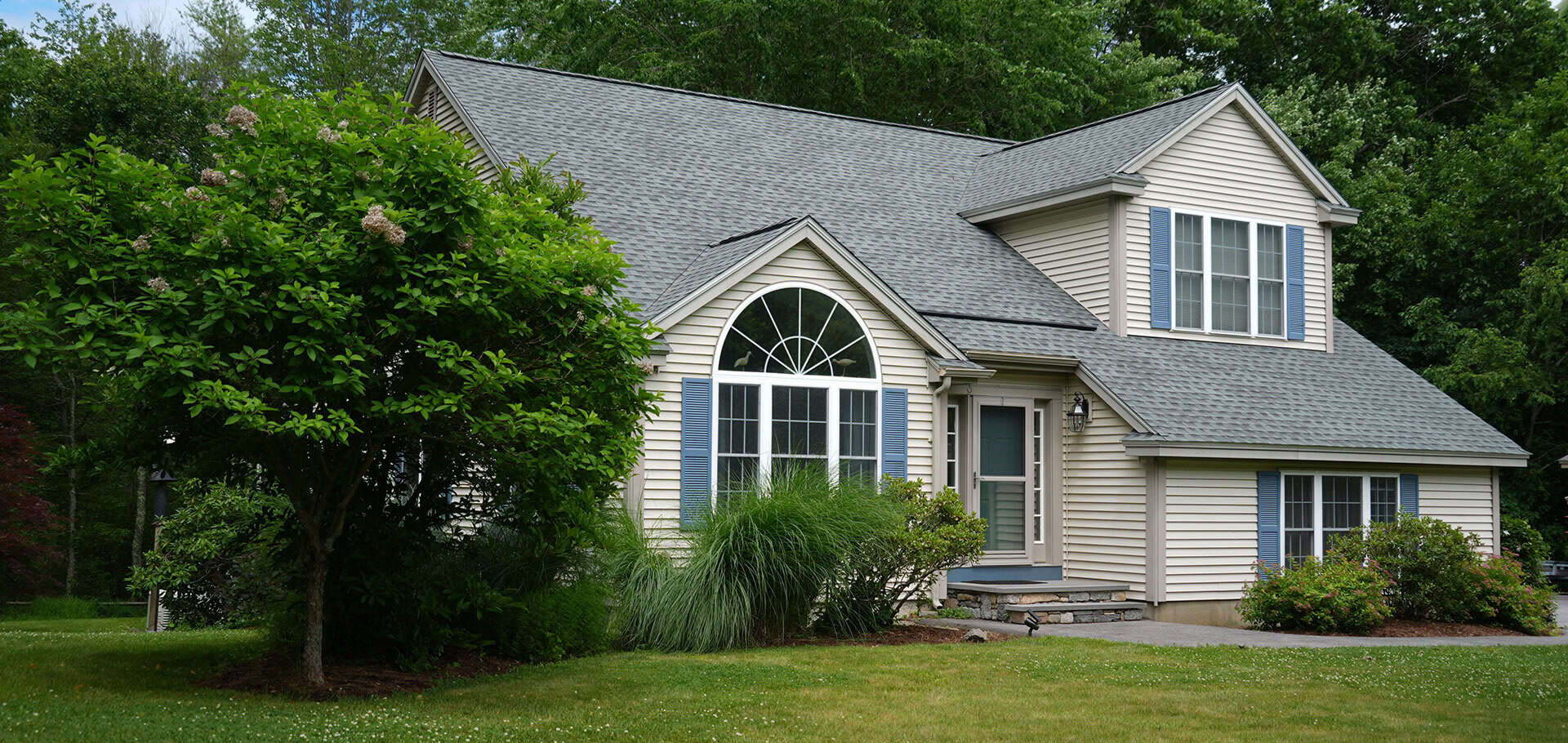

Skylight Installation and Repair for Portsmouth, NH Homes

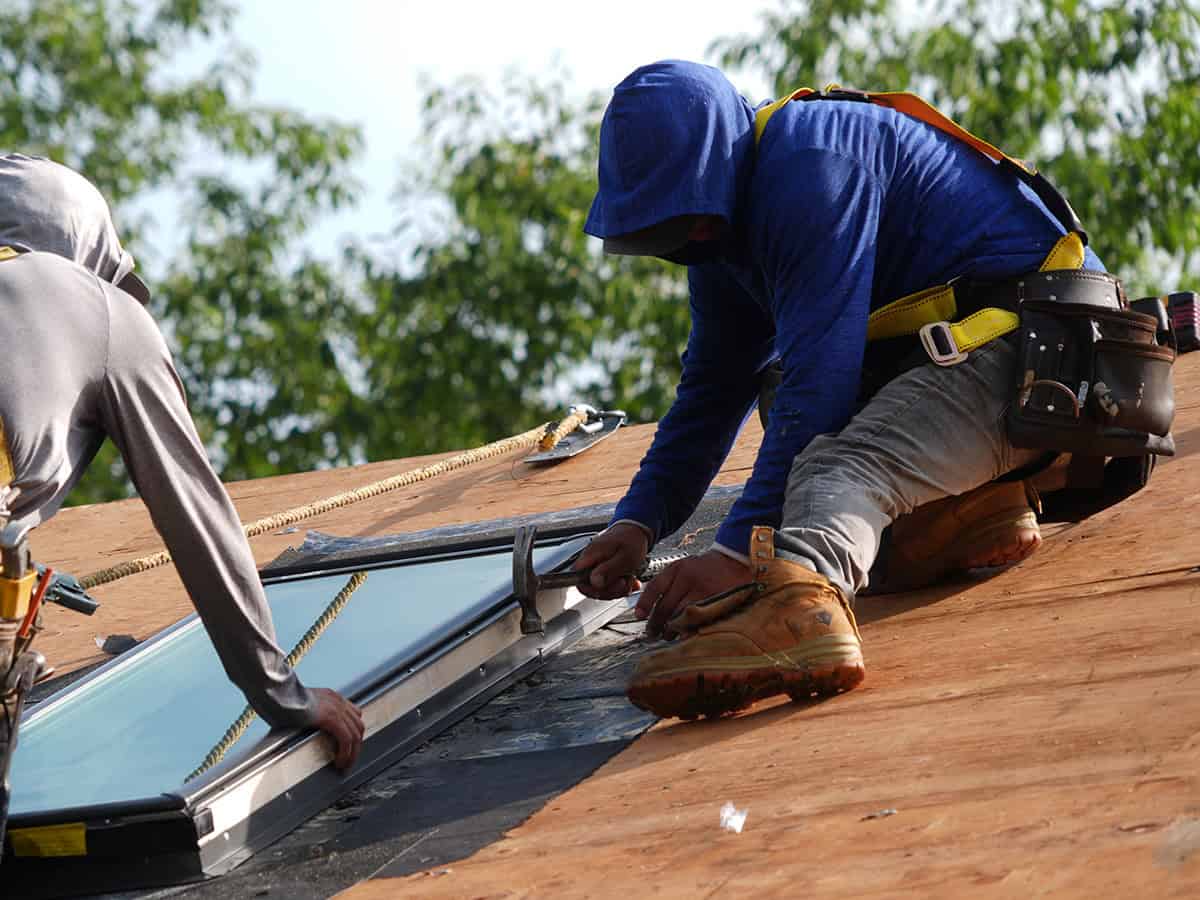
J. Carnes & Son Roofing crew member in a safety harness fastening the flashing on a new VELUX skylight during a roof installation on a New Hampshire home

Portsmouth houses are built close together, and a lot of them are built tall and narrow. A South End colonial with a neighbor six feet off each side gets very little daylight into the middle of the house, and the third-floor rooms under the roof get almost none. That is the call we get most from Portsmouth: not “we want a skylight” so much as “the upstairs bathroom has no window and the hallway is dark at noon.” A skylight fixes that in a day, if the roof and the framing will take one.

The other half of our skylight work in the city is repair. Portsmouth has a lot of skylights that went in during the 1980s and 1990s, plastic domes and early insulated glass units that are now fogged, yellowed, or dripping every March. Here is how we think through both jobs, from the harbor neighborhoods out to Elwyn Park.

The short version

  • A skylight is a roofing job before it is a window job. The unit matters less than the flashing, the underlayment around the opening, and how the framing is headed off.
  • Most Portsmouth roofs take a deck-mounted VELUX skylight. Low-slope roofs, including the flat sections on downtown buildings and some gambrel tops, need a curb-mounted unit instead.
  • Adding a skylight cuts roof framing, so it needs a building permit in Portsmouth. Inside the Historic District, a skylight visible from the street can also need Historic District Commission review.
  • Most “leaking” skylights we open up are either winter condensation or failed flashing. The glass itself is rarely the problem unless the seal has fogged.
  • The cheapest time to add or replace a skylight is during a roof replacement, when the deck is already open and the flashing kit goes in with the new shingles.

Which Portsmouth homes are good candidates for a skylight?

Direct answer: Any home with a sloped roof over a room that has no window or only a north-facing one. In Portsmouth that usually means third-floor bedrooms in the South End and West End, kneewall rooms in Elwyn Park and Pannaway Manor capes, and bathrooms and stair halls in the narrow lots off Islington Street.

Walk the older neighborhoods and you can see why skylights are so common here. Houses sit tight to the lot lines, so side windows look straight into a neighbor’s clapboards. Three-story colonials near Strawbery Banke have finished attics with one small gable window at each end and a long dark hallway between. The wartime houses in Atlantic Heights and the post-war capes in Pannaway Manor and Elwyn Park have upstairs rooms tucked under the roof with kneewalls, which means the only place daylight can come from is straight up.

What we look at on the first visit is the roof over that room, not the room. We want a pitch that VELUX rates for a deck-mounted unit, rafters we can head off without touching a load path, and a clear run for the light shaft down to the ceiling. Where the roof is low-slope, or the rafters are shallow 2x4s in a house from 1900, the answer changes, and we will say so on the spot rather than sell a unit that will fight the house.

What does a skylight installation actually involve?

Direct answer: We cut the roof opening, frame headers between the rafters, set the skylight on the deck, then build the waterproofing around it in layers: self-adhered ice and water membrane, the VELUX flashing kit woven into the shingles course by course, and a finished light shaft inside. The roof work usually takes a day.

The order of operations is what separates a skylight that lasts from one that leaks in its third winter. Once the opening is cut and headed off, we run ice and water shield up onto the curb of the unit and out onto the deck on all four sides, so water that ever gets past the metal has a sealed path back onto the roof. Then the flashing kit goes in from the bottom up, sill flashing first, step flashing woven with each shingle course up the sides, and the head flashing tucked under the courses above. Nothing depends on caulk.

Inside, the light shaft is where a lot of installers cut corners. We frame it, insulate it, and finish it so the shaft does not become a cold chimney that sweats every January. A straight shaft gives the most direct light; a flared shaft spreads it across a bigger room. On the tall houses in the South End, the shaft can be several feet long, so we talk through the geometry before anyone cuts drywall.

The units themselves are all VELUX, which is the only brand we install, with fixed, manual venting, and solar-powered venting models. The solar units open and close from a remote and shut themselves when the rain sensor gets wet, which matters on the Seacoast, where a squall can come in off the water while you are at work. More on the product line is on our skylight installation and repair page.

Deck-mounted or curb-mounted: which does a Portsmouth roof need?

Direct answer: Deck-mounted skylights sit directly on the roof sheathing and are the right choice for most pitched shingle roofs in Portsmouth. Curb-mounted skylights sit on a raised wood curb and are for low-slope roofs, for replacing an existing curb-mounted unit, and for roofs where the pitch is under the deck-mounted minimum. We measure the pitch before quoting.

Portsmouth has more low-slope roofs than most Seacoast towns. Downtown, the mixed-use buildings on Market, Congress, and State streets often have flat or nearly flat roofs behind a parapet. The gambrel roofs common in the older neighborhoods have a steep lower slope and a much flatter upper slope. Skylights on those upper slopes, or on a flat commercial roof, want a curb, because water sits longer and a deck-mounted unit is not designed for it.

A curb also makes replacement simple later. The curb stays, the roofing ties into it, and a new unit drops on top when the old one has run its life. If a house already has curb-mounted skylights from a previous owner, we will usually keep the curbs, check that they are tall enough for the current roofing, and replace only the units and the flashing.

Do you need a permit to add a skylight in Portsmouth?

Direct answer: Yes, for a new skylight. Cutting and reframing rafters is structural work, and the City of Portsmouth’s Inspection Department issues a building permit for it. A like-for-like replacement in an existing opening is usually simpler. Inside the Historic District, a skylight visible from a public street may also need Historic District Commission approval. We handle the paperwork.

This is the part of a Portsmouth skylight job that surprises people who moved here from a town with looser rules. A large part of the older city is inside the Historic District, and the commission reviews changes to exterior surfaces that can be seen from the street. A skylight on the rear slope of a South End colonial is normally a straightforward conversation. The same unit on the front slope facing the sidewalk may not be. We will tell you which case you are in before you get attached to a location, and we will route the skylight to the back or the side roof when that gets the light you want without a hearing.

Outside the district, the building permit is the only step. We pull it as the contractor, schedule the framing inspection if the inspector wants to see the headers before we close up, and keep a copy for your file. If you ever sell, the buyer’s home inspector will ask about it.

Why do skylights leak, and is yours really leaking?

Direct answer: Three causes cover almost every wet skylight we see in Portsmouth: winter condensation dripping off cold glass, flashing that failed or was reused during a past reroof, and an insulated glass seal that fogged and let moisture in. We diagnose from the roof and the attic, not from the stain on the ceiling.

Condensation fools a lot of homeowners. A skylight over a bathroom or a kitchen sees a lot of warm, wet air, and on a February morning the glass is the coldest surface in the room. Water forms on the inside, runs down, and drips off the bottom edge onto the sill or the floor. It looks exactly like a leak and it stops the moment the weather turns. The fix is ventilation and a properly insulated shaft, not roof work. We wrote about the winter side of this in our post on why snow around skylights goes unnoticed in winter.

Flashing failures are the real leaks. The pattern we see most in the city is a roof that was replaced ten or fifteen years ago by a crew that shingled around the existing skylight and reused the old flashing, or, worse, buried the joint in roofing cement. Cement cracks in two or three winters of freeze and thaw. Once the step flashing is compromised, wind-driven rain off the harbor finds the gap during every nor’easter, and the stain shows up on the ceiling a foot or two downhill of the skylight.

Fogged glass is the third case. When the seal on an insulated glass unit fails, moisture gets between the panes, the glass looks permanently hazy, and in cold snaps it can drip from the inside. That is not repairable. The unit gets replaced.

Should you repair or replace an old skylight?

Direct answer: Repair when the unit is sound and the problem is flashing or condensation. Replace when the glass is fogged, the frame is an old acrylic dome that has yellowed or crazed, the unit is more than 20 to 25 years old, or the roof around it is being replaced.

The acrylic bubble skylights that went into so many Portsmouth houses in the 1980s are the easiest call. The plastic goes cloudy and brittle, the seal at the base fails, and the light they let in is a dull gray. Replacing one with a glass VELUX unit in a new deck-mounted opening is usually a one-day job, and the difference in the room is immediate. Newer glass also carries low-E coatings that cut the summer heat gain we covered in our post on how skylight UV exposure affects attic comfort.

Where the unit is a good glass skylight from the last 15 years and the only problem is a bad reroof around it, we reflash. That means lifting the shingles around the opening, removing the old flashing and any cement, running new ice and water membrane, and installing the correct VELUX flashing kit for that model and that roofing. It is a half-day repair that solves the leak for good.

Is it better to add skylights during a roof replacement?

Direct answer: Yes, if you can time it that way. During a full replacement the deck is open, the crew is already on the roof, and the skylight flashing goes in with the new shingles as one system. Existing skylights should be replaced at the same time, not shingled around.

We say this on nearly every Portsmouth replacement estimate. If there is a room you have wanted more light in, the reroof is the moment. And if the house already has skylights that are 15 or 20 years old, replacing them while the roof is off is the right move even when they are not leaking yet, because the new roof will outlast them and nobody wants to open up a five-year-old roof to swap a skylight. Our post on roof replacement in Portsmouth walks through how we plan the whole job.

Skylights also go on metal roofs. We install standing-seam roofs across the Seacoast and set VELUX units with the metal-roof flashing kit, which is built for the panel profile instead of shingle courses. The detailing is different, but the principle is the same: the flashing is part of the roof system, installed by the roofing crew, not a trim piece added afterward.

Who installs and repairs skylights in Portsmouth, NH?

Direct answer: J. Carnes & Son Roofing installs, replaces, and repairs VELUX skylights across Portsmouth, from the South End and the Historic District to Atlantic Heights, Elwyn Park, and Pannaway Manor. We are a family-run New Hampshire roofing company founded in 1998 and a GAF Master Elite contractor, and our own roofing crews flash every unit. Estimates are free.

Skylights are a small share of what we do in Portsmouth, and that is the point. We are on the city’s roofs every week for roofing in Portsmouth, full replacements, repairs, and gutters, so a skylight goes in by people who spend their days making roofs not leak. A window company sends a window installer up a ladder. We send the crew that built the roof.

Every skylight job starts with a look at the roof, the attic, and the room. You get a straight answer about whether the roof will take the unit, what the permit situation is for your address, and a written number for the whole job, including the light shaft. We do not quote skylights from the driveway. If the project is part of a larger roof, financing options are available, and you can schedule a free estimate for the skylight alone or the full roof replacement.

Frequently asked questions

How long does a skylight installation take?

For one or two units on a shingle roof, the roof work is done in a day. The light shaft inside takes another day or so for framing, insulation, and drywall, and a painter finishes after that. Adding a skylight during a roof replacement adds very little time to the job, since the crew is already working that section of the deck.

Do skylights cause ice dams?

A badly insulated skylight shaft can. Warm air rising through an uninsulated shaft heats the roof deck around the unit, melts snow above it, and the water refreezes at the eave. A properly insulated and air-sealed shaft keeps the deck cold. Where we see ice building around a skylight every winter, the shaft is the first thing we check.

Can a skylight be installed on a standing-seam metal roof?

Yes. VELUX makes flashing kits specifically for metal roofing, and we install skylights on the standing-seam roofs we build across the Seacoast. The flashing ties into the panel ribs rather than shingle courses, so it is a different detail, but the unit and the framing are the same. It is easiest to plan the skylight when the metal roof is installed.

What is the difference between a skylight and a roof window?

A skylight is set high on the roof, out of reach, and is either fixed or opened by a crank, a rod, or a solar-powered motor. A roof window is mounted within reach, in a finished attic or a loft, and opens like a window so you can look out and even clean the outside of the glass from inside. VELUX makes both, and we install both.

Will a venting skylight leak in a nor’easter?

Not when it is flashed correctly and closed. A venting VELUX unit seals the same as a fixed one when shut, and the solar-powered models close themselves when the rain sensor gets wet. What leaks in a nor’easter is bad flashing or old roofing cement around the opening, which wind-driven rain off the water finds every time. That is a flashing repair, not a reason to avoid a venting unit.
24/7 Emergency Storm Damage Roof Repair on the NH Seacoast

J. Carnes & Son Roofing crew member in a hard hat clearing torn-off shingle debris into a wheelbarrow over protective tarps during a roof repair on a New Hampshire Seacoast home

The calls come in a pattern we know by heart. A nor’easter runs up the coast overnight, the wind swings to the northeast around two in the morning, and by six the phone starts. Water spotting a bedroom ceiling. A ridge vent peeled back. Half a dozen shingles in the yard and nobody sure whether what is left up there is still holding.

Most storm damage looks worse from the driveway than it is, and a little of it is worse than it looks. That matters, because the first few hours decide whether you end up with a roof repair or a roof, ceiling, insulation, and drywall repair. Here is what we do when that call comes in, and what you should be doing before we get there.

The short version

  • J. Carnes & Son Roofing answers emergency storm damage calls 24/7 across the New Hampshire Seacoast and southern Maine, using our own crews rather than a subcontracted after-hours service.
  • In the first hour your job is water control from inside: contain the drip, move what is under it, and photograph everything before anyone touches the roof. Do not climb up in wind or on a wet roof.
  • An emergency tarp is a temporary lid, not a repair. Installed properly it holds for weeks, long enough to dry the house out, get an adjuster through, and schedule the real work.
  • Active water entry, exposed decking, a peeled ridge or eave, a limb on the roof, and anything structural are true emergencies. A few missing shingles on a dry roof can wait for a scheduled slot.
  • Salt air changes how coastal roofs fail: fasteners and flashings give up before the shingles do, and damage starts at the eaves and rakes rather than out in the field.

Who offers emergency storm damage roof repair on the New Hampshire Seacoast?

Direct answer: J. Carnes & Son Roofing provides 24/7 emergency storm damage roof repair across the New Hampshire Seacoast and into southern Maine. We are a local, family-run roofing company. Our own crews handle emergency tarping, leak stabilization, and the permanent repair that follows, and we are equipped to respond the same day.

Emergency work is not something we bolt on after a storm. It is the same crews who install roofs here every week. A roofer who already knows your town knows which stretches of shore take the wind first and what was probably built under those shingles in 1978. That is the difference between a tarp thrown over a hole and a stabilization that actually stops water.

We cover Portsmouth, Rye, Hampton, North Hampton, New Castle, Stratham, Greenland and the towns around them, plus flat and membrane roofs through our commercial roofing side. If you are not sure you are inside our range, call and ask.

What should you do in the first hour after a storm damages your roof?

Direct answer: Work from inside the house. Put a bucket under the drip, move furniture and electronics clear, and if a ceiling is bulging with trapped water, poke a small hole at the low point so it drains in a controlled way. Photograph everything before any work starts. Then call a roofer, and stay off the roof.

That last part is the one people ignore. A wet asphalt roof is slick, one with granule loss is slicker, and a gusting northeast wind will take you off a ladder without warning. Whatever is happening up there is already happening, and two more hours will not change it.

The controlled-drain trick surprises people. Water that gets past the roof runs along the top of the ceiling drywall until it finds a low spot and pools, and the drywall sags into a bubble. Left alone, that bubble lets go all at once and takes a section of ceiling with it. One small hole at the bottom of the sag turns a ceiling replacement into a patch and a coat of paint.

Photograph the ceiling, the attic if you can reach it safely, and the yard where shingles landed. Do it before the tarp goes on, because once a tarp is down the adjuster is looking at a covered roof and taking your word for what is under it.

How does emergency roof tarping work, and how long does it hold?

Direct answer: We dry in the damaged area with heavy tarp run up and over the ridge where possible, fastened into sound decking through furring strips rather than loose nails, and lapped so water sheds instead of pooling. Installed that way it holds through several weeks of normal weather, enough to dry out, get inspected, and schedule the repair.

We run tarp over the ridge whenever the damage sits near the top of a slope, for a simple reason. Water finds the top edge. A tarp that stops partway up a slope leaves a seam facing uphill, and the next rain runs straight under it. Carrying the material over the ridge and down the far side takes that seam out of the equation. Where the roof is too big or too cut up for that, the top edge gets tucked under the course above and battened down so it cannot lift.

Fastening is the other thing that separates a working tarp from a noisy one. Tarps fail in wind because somebody nailed through the grommets, and grommets tear. We sandwich the material under furring strips and fasten through the strips so the load spreads across the wood. That does put fasteners into your roof, in the area already being replaced, and we note where they went.

What kind of storm damage actually counts as an emergency?

Direct answer: Call right away for water entering the house, exposed decking, a lifted or peeled ridge, rake or eave edge, a limb on the roof, and anything that has moved structurally. A handful of missing shingles on a roof that is not leaking is a real repair, but not an overnight one, and it can wait for a scheduled slot.

We would rather take the call and tell you it can wait than have you decide that yourself and get it wrong. Water coming in is always urgent, because the bill climbs by the hour once insulation is soaked. Exposed decking is urgent because the next rain does not need to be dramatic to do harm. A lifted edge is urgent because edges are where wind gets its grip. A limb on the roof is urgent whether or not you can see damage, because the weight is doing something you cannot judge from the ground.

Missing shingles on a dry roof, a bent gutter, or a vent cap in the yard are all worth getting on the calendar quickly. They are not worth a two in the morning response, and a roofer who insists otherwise is selling urgency.

Why does Seacoast storm damage look different from inland damage?

Direct answer: Coastal roofs take salt-laden wind from a consistent direction, so fasteners and metal flashings corrode years before the shingles wear out. Damage tends to start at the eaves, rakes, and ridge where wind can get under an edge, which means a roof can look fine from the street while its perimeter has quietly let go.

Drive twenty miles west and the same roof ages differently. Out there the shingles give up first, sun-baked and curling in the field. Here they often still look serviceable while the nails holding them have rusted thin, the drip edge has gone chalky, and the step flashing at a chimney flexes when you press it. The roof passes a casual look and fails a storm.

So on a storm call we pull an edge and look underneath instead of counting missing shingles from the lawn. A roof that lost six shingles at the rake in a forty mile per hour gust is telling you something about the several hundred still up there. We went deeper on that in our post on wind damage on coastal homes, and it is why our Seacoast roof inspections spend most of their time at the perimeter. Gutters take the same beating and get overlooked because they are not leaking indoors, so if yours moved, say so when you call and we will look at the gutters and leaf guards while we are there.

What happens after the emergency repair?

Direct answer: Once the house is dry and stable we document what we found, help you assemble the claim if you are filing one, and lay out the real options. Sometimes that is a targeted repair of one slope. Sometimes the storm exposed a roof that was near the end anyway, and replacement is the honest recommendation.

We will tell you which it is even when the repair is the smaller job. A patched slope on a roof with four good years left is a fine outcome. A patched slope on a roof that has been failing since 2009 buys one winter, and you should hear that from us in September rather than find out in February.

If it does turn into a replacement, the process is the one we walk every homeowner through in our guide to planning a roof replacement, and everything we install is laid out on our roofing services page. On cost, we do not quote roofs over the phone and we do not publish numbers, because a number without a look at your roof is a guess dressed up as information. Estimates are free, and if the timing is hard we have financing options.

How do you avoid the storm chasers who show up after a big blow?

Direct answer: Hire a roofer who was working here before the storm and will still be here after it. Ask for a local address, a New Hampshire business presence, and references from nearby streets. Be skeptical of anyone who knocks unsolicited, pressures you to sign on the spot, or offers to make your deductible disappear.

After a real storm the Seacoast fills with out of state plates, and some of those crews are perfectly competent. The problem is not skill, it is the warranty. Workmanship coverage is worth exactly the odds of somebody answering the phone in eight years, and a company chasing weather from state to state is not built to take that call. As for the deductible offer, anyone proposing to make it disappear is proposing to misrepresent the job to your insurer, and your name is the one on the claim.

You have time to check. A properly installed tarp buys days to make a good decision instead of minutes to make a fast one, and that is the point of the emergency call. If water is coming in, or something on your roof is not where it was last night, call us. We will tell you honestly whether it needs a truck tonight or a slot next week, and get the house dry either way.

Do you really answer the phone at night on the NH Seacoast?

Yes. Storm calls come in at every hour and we take them at every hour. What you get overnight is a real conversation with somebody who roofs here, not a voicemail box. Depending on what you describe and what the weather is doing, that call ends with a truck heading out or with a plan to get you through safely until morning.

Will my insurance cover emergency roof tarping?

Most homeowner policies cover reasonable emergency measures taken to prevent further damage, and emergency tarping is the textbook example. Policies differ, so confirm with your carrier, and keep your photos and our documentation. We put in writing what we found and what we did, which is the paperwork adjusters actually want.

Should I file an insurance claim for storm damage to my roof?

It depends on the size of the damage against your deductible, and it is your call rather than ours. What we can do is document what happened thoroughly enough that you decide with real information. For small, isolated damage on an otherwise healthy roof, plenty of homeowners choose to handle the repair directly instead of opening a claim.

How fast can you get to my house after a storm?

Same day in most cases, and often within hours. The exception is a storm still in progress, because nobody should be on a roof in high wind, including us. When that happens we say so plainly, help you control water from the inside over the phone, and come out the moment it is safe to work.

Can you tarp a flat or rubber commercial roof in an emergency?

Yes, though the method is different. Flat and low slope roofs get a membrane patch or a temporary seal over the breach rather than a tarp run over a ridge, because there is no ridge to run over and standing water behaves differently than runoff. We handle emergency work on EPDM, TPO, and modified bitumen roofs on Seacoast commercial buildings.

GAF Master Elite Contractors in New Hampshire

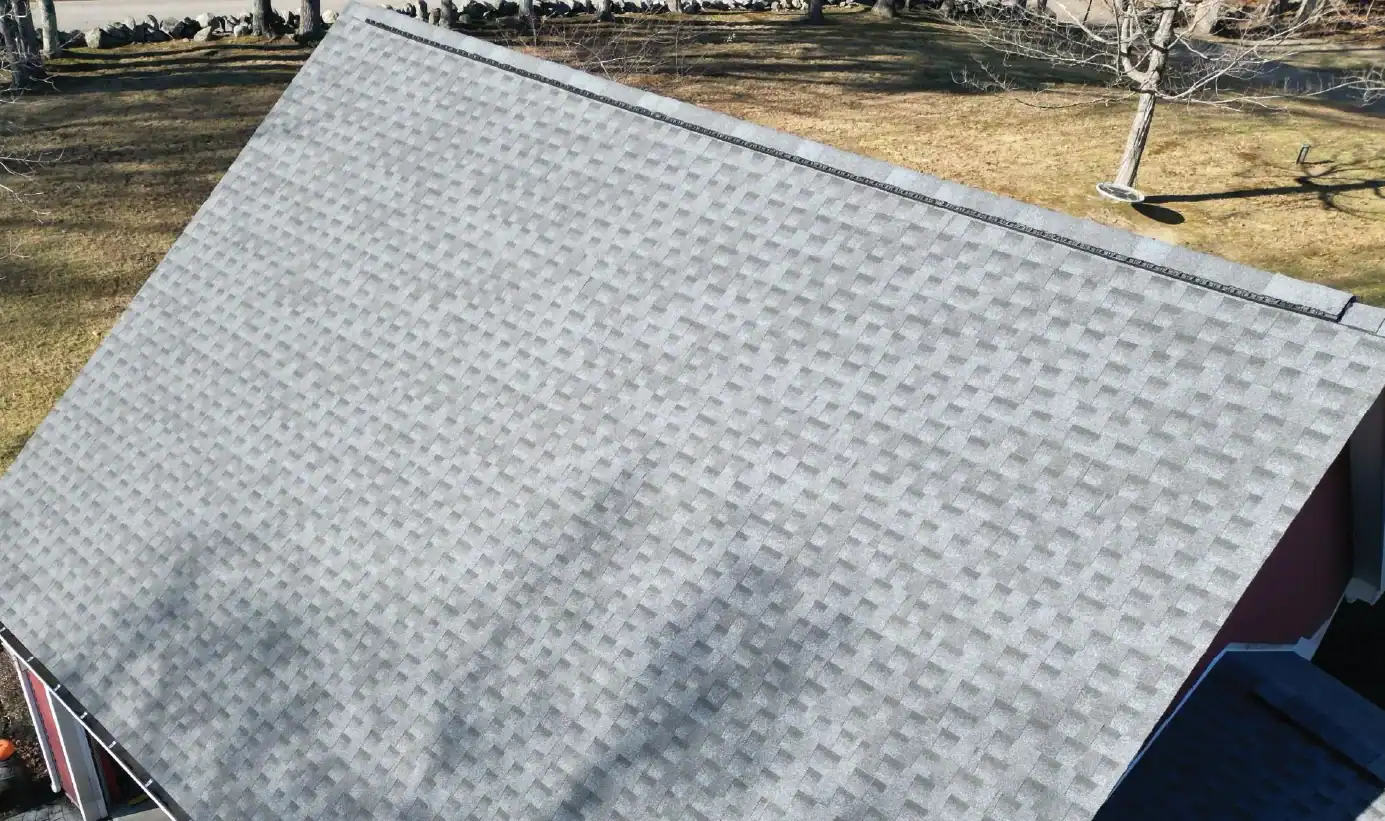
Architectural asphalt shingle roof installed by GAF Master Elite contractor J. Carnes & Son Roofing on a New Hampshire colonial home

Who are the GAF Master Elite certified roofing contractors in New Hampshire? There are fewer of us than most homeowners assume. GAF says only about 2 percent of roofing contractors in North America hold Master Elite status, and in a state the size of New Hampshire that works out to a short list. J. Carnes & Son Roofing is on it. We hold GAF Master Elite certification and the GAF President’s Club Award, and we install from Hampton Falls and Salem across the Seacoast, the Lakes Region and into southern Maine.

This post explains what those two credentials actually require, why they matter when you are comparing estimates at the kitchen table, which warranties only a Master Elite contractor can put on your roof, and how to check for yourself whether a roofer who claims the badge really has it. We have been asked all of this on driveways for years. Here it is written down.

The short version

  • GAF Master Elite is the manufacturer’s top contractor certification. GAF states that only about 2 percent of roofing contractors qualify, and it has to be re-earned, not bought.
  • The President’s Club Award sits above Master Elite. GAF describes it as a select few Master Elite contractors recognized for performance, reliability and service. J. Carnes & Son holds it.
  • GAF’s strongest warranty, the Golden Pledge, can only be offered by a Master Elite contractor. A non-certified roofer cannot sell it to you no matter what shingle they install.
  • Anyone can claim the badge on a website or a truck door. GAF keeps a public directory, and checking takes about a minute.
  • Certification does not set the price of your roof. The roof does. We explain what does move the number in our guide to roof cost in New Hampshire.

What does GAF Master Elite actually mean?

Direct answer: Master Elite is GAF’s highest contractor certification. To hold it, a roofer has to be properly licensed, carry adequate insurance, show a track record of quality work, and commit to ongoing GAF training. GAF says only about 2 percent of roofing contractors meet the standard, and the status is reviewed rather than granted once.

GAF is the largest roofing manufacturer in North America, and it certifies contractors in tiers. At the bottom is a basic contractor listing, which means little more than that the company buys GAF product. Master Elite is the top of that ladder. It is the tier GAF points homeowners toward when they want a roof installed to the manufacturer’s own specifications, and it is the only tier that unlocks GAF’s best warranties.

The reason it is rare is not that the requirements are exotic. It is that they have to be met all at once and kept up every year. Plenty of good roofers never bother, and plenty of not-so-good ones cannot get past the insurance and licensing checks. On the Seacoast, where the ocean and the winter both work on a roof harder than they do inland, we think the training piece matters more than people give it credit for.

How does a roofing contractor earn Master Elite status?

Direct answer: A contractor applies to GAF and has to prove four things: proper state licensing, adequate liability insurance, a solid reputation with a documented history of quality work, and a commitment to GAF’s ongoing professional training. GAF reviews all four, and the status has to be maintained, not just earned once.

Here is what that looks like in practice, because the four bullet points on GAF’s site undersell it.

  • Licensing. The company has to hold whatever license the state requires, in its own name. We are licensed in New Hampshire and Maine, which is exactly where we work.
  • Insurance. GAF requires proof of liability coverage. We would add: ask any roofer for a certificate of insurance before they set a ladder, Master Elite or not. The good ones expect the question.
  • Reputation. GAF looks at a contractor’s history before certifying them, and keeps looking after. Our Google reviews and our GAF reviews are both public, and both sit at 4.9 stars across hundreds of jobs.
  • Training. This is the part homeowners never see. GAF runs installation training on its roofing systems, and Master Elite contractors are expected to keep their crews current on it. Shingle technology changes. Ventilation guidance changes. The right way to run ice and water shield in a valley on a coastal house is not the way it was done twenty years ago.

None of this is a guarantee that a Master Elite crew never makes a mistake. It is a guarantee that the company has been vetted by the manufacturer whose product is going on your house, and that the manufacturer will stand behind the installation in a way it will not for an uncertified roofer.

What is the GAF President’s Club Award, and why does it matter to a homeowner?

Direct answer: The President’s Club Award is GAF’s recognition for a select group of Master Elite contractors that show excellence in performance, reliability and service, and that consistently install roofing systems qualifying for GAF’s best warranties. It is earned on top of Master Elite, not instead of it. J. Carnes & Son Roofing is a GAF 3-Star President’s Club Award winner.

If Master Elite is the certification, President’s Club is the report card. GAF’s own wording is that it entrusts a select few Master Elite contractors with President’s Club status. The award recognizes contractors who are not just certified but are consistently installing complete GAF roofing systems, the kind that qualify for the Golden Pledge warranty, and doing it well enough and often enough that GAF notices.

For a homeowner, the practical meaning is simple. A President’s Club contractor has been installing full systems to the manufacturer’s spec at volume, and GAF has been checking. It is the difference between a company that qualified once and a company that keeps qualifying.

We are proud of the award, but we would rather you understand what it stands for than just see the logo. The logo is on our asphalt shingle roofing page alongside the Golden Pledge details, and on our listing in GAF’s contractor directory, which is where you should go to check it.

Which warranties can only a Master Elite contractor offer?

Direct answer: The GAF Golden Pledge Limited Warranty, which is GAF’s strongest, is available only through Master Elite contractors. It covers both materials and workmanship, and it is backed by GAF rather than by the roofer alone. A contractor without Master Elite status cannot offer it, regardless of which GAF shingles they install.

This is the part that changes your decision, so it is worth slowing down on.

Every GAF shingle comes with a manufacturer’s warranty on the material itself. That is true whether a Master Elite crew installs it or the neighbor’s cousin does. What changes with certification is the warranty on the whole system and on the workmanship.

Warranty tier Who can offer it What it covers
Standard shingle warranty Any installer Manufacturing defects in the shingles
System Plus GAF certified contractors and above The GAF roofing system as a whole, with extended material coverage
Golden Pledge Master Elite contractors only Materials and workmanship, backed by GAF, with a GAF inspection of the installation

Two things about the Golden Pledge that homeowners find surprising. First, GAF inspects the finished roof before the warranty is issued. A manufacturer’s representative actually looks at the installation. Second, the workmanship coverage is carried by GAF, not by us. If we were to close our doors tomorrow, the workmanship warranty would still be there. A roofer’s own workmanship warranty, however generous it sounds, is only as durable as the roofer.

We install the full GAF system on most of the residential roofs we do, which is what makes the Golden Pledge available. If you want it, say so at the estimate. It is a line item, and it is a decision, not something that appears automatically.

Is J. Carnes & Son Roofing GAF Master Elite certified?

Direct answer: Yes. J. Carnes & Son Roofing holds GAF Master Elite certification and is a GAF 3-Star President’s Club Award winner. Both are listed on GAF’s public contractor directory under our Hampton Falls, New Hampshire location, contractor number 1002656. We are a family-run company founded in 1998.

We have been a GAF contractor for a long time, and we have held Master Elite through the years when it would have been easier to let it lapse. The training requirement in particular is a real commitment for a crew that would rather be on a roof than in a classroom. We keep it up because the roofs we put on in Rye, Hampton and New Castle take more weather in a decade than most roofs take in their whole life, and the manufacturer’s spec exists for a reason.

What Master Elite does not mean is that we only install GAF. We do a great deal of standing seam metal roofing on the coast, and metal is the right answer for some houses. We also do commercial membrane work. The certification covers our asphalt shingle installations, which are the majority of residential roofs on the Seacoast and the ones the Golden Pledge applies to.

How do you check whether a New Hampshire roofer is really Master Elite?

Direct answer: Go to GAF’s website, open the contractor locator, and search the company name or your zip code. Master Elite contractors are labeled as such on their listing, along with any President’s Club award. If a roofer’s name does not come up, or comes up without the Master Elite designation, they do not hold it, whatever their website says.

We bring this up because the badge gets borrowed. We have seen the Master Elite logo on the websites of companies that are not on GAF’s list, and on trucks belonging to crews that were certified years ago and are not anymore. The status expires if the requirements stop being met, and the logo does not remove itself from a van door.

So check. It takes about a minute. GAF’s directory is the only source that counts, and every legitimate Master Elite contractor will be happy you looked. Ours is linked above. While you are there, read the reviews on the GAF listing too. They are collected by GAF, not by the contractor, which makes them harder to curate.

One more thing to ask: whether the certification is held by the company giving you the estimate, or by a manufacturer’s program the company is loosely affiliated with. Master Elite is company-specific. It does not transfer through a franchise, a buying group or a friend.

Does hiring a Master Elite contractor cost more?

Direct answer: The certification itself does not set the price. The size and pitch of your roof, the layers coming off, the condition of the deck, the material you choose and how hard the house is to work around set the price. A Master Elite estimate should look like any honest estimate, with the difference that the Golden Pledge warranty is available as an option.

We hear this worry a lot, and it is reasonable. The honest answer is that a well-run roofing company charges what the roof costs to do properly, and the things that make a roof expensive are the things that are true of the roof, not of the logo on the truck. We wrote a full guide on what determines roof cost in New Hampshire that walks through each of those factors, and none of them is certification.

Where a Master Elite estimate can differ is in what it includes by default. A crew trained on the full GAF system tends to price the full system: ice and water shield run well past code minimum, proper ridge and intake ventilation, new flashing rather than reused, and the starter and hip and ridge products that are part of the spec. A low estimate from an uncertified roofer often gets there by leaving those out. That is not a cheaper roof. It is a different roof.

If the timing is the issue rather than the number, we offer financing options on residential work.

Where does J. Carnes & Son install as a Master Elite contractor?

Direct answer: From our Hampton Falls headquarters and our Salem office, we install across the New Hampshire Seacoast, including Portsmouth, Rye, Hampton, Exeter and Dover, inland through Rockingham and Strafford counties, up into the Lakes Region, and across the border into York and Cumberland counties in southern Maine.

Master Elite status follows the company, not a single address, so it applies to every roof we install. Our service area runs the length of the Seacoast from Seabrook to Portsmouth and Rye, west through Exeter and out to the Salem and Windham area, north to Dover and Rochester, and into southern Maine from Kittery to the Portland area. The full list is on our service areas page.

The coastal towns are where the certification earns its keep. Salt air, nor’easters, ice dams and freeze-thaw cycles are hard on a roof, and a system installed to the manufacturer’s specification holds up to them in a way a shortcut installation does not. Our guide to roof replacement in Portsmouth goes into what that looks like on a harbor-side house.

If you want a GAF Master Elite contractor to look at your roof, book a free estimate and we will walk it, measure it, and put the options in writing, including the Golden Pledge if you want it. See everything we do on our roofing services page.

Frequently asked questions

Is GAF Master Elite the same as GAF Certified?

No. GAF Certified is an entry-level designation. Master Elite is the top tier and has stricter requirements for licensing, insurance, reputation and training. Only Master Elite contractors can offer the Golden Pledge warranty. GAF says about 2 percent of roofing contractors hold Master Elite status.

Can any roofer install GAF shingles?

Yes, GAF shingles are sold through normal supply channels and any roofer can buy and install them. The shingles carry their standard material warranty regardless of who installs them. What an uncertified roofer cannot do is offer GAF’s system and workmanship warranties, which require a certified or Master Elite contractor.

What is the GAF Golden Pledge warranty?

The Golden Pledge is GAF’s strongest warranty. It covers both the roofing materials and the workmanship of the installation, it is backed by GAF rather than by the contractor, and it includes a GAF inspection of the finished roof before the warranty is issued. It is available only through Master Elite contractors and must be requested at the time of the estimate.

Do I need a Master Elite contractor to get any GAF warranty?

No. The basic shingle warranty applies to any installation. You need a GAF certified contractor for the System Plus warranty and a Master Elite contractor for the Golden Pledge. If a warranty on the workmanship matters to you, and on a coastal roof it should, Master Elite is the tier that provides it.

How do I verify that a contractor is GAF Master Elite?

Search the company on GAF’s contractor directory at gaf.com. A genuine Master Elite contractor is labeled on their listing, along with any President’s Club award. The listing also shows reviews that GAF collects directly. If the company is not in the directory, or is listed without the Master Elite designation, it does not currently hold the certification.